
Shahbod Noori

Editor/CEO
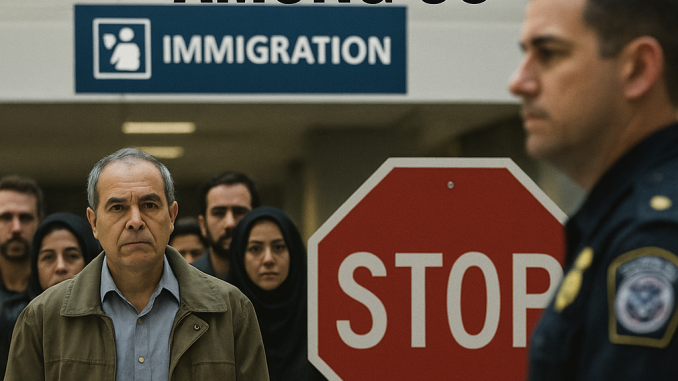
In recent weeks, Iranian communities across the United States have been shaken by a wave of immigration enforcement actions that followed the 12-day war between Iran and Israel. These actions come amid serious threats from Iranian authorities about activating “sleeper cells” on American soil — statements that have understandably triggered alarm among U.S. intelligence and immigration agencies.
As a result, several Iranian-owned businesses, community centers, and private residences were raided in major cities such as Los Angeles, Houston, Atlanta, and New York. A number of individuals were arrested — some with verified criminal records or clear affiliations with the Islamic Republic’s intelligence and military apparatus. However, among those detained were also genuine asylum seekers, many of whom fled Iran’s oppressive regime in recent years in search of safety and freedom.
Two harsh realities have emerged:
The Islamic Republic’s reach is not limited to Iran. Its influence, both covert and overt, is present in diaspora communities, particularly in North America. Their mission is clear: infiltrate, surveil, divide, and silence dissidents — even in exile.
The presence of regime operatives among us puts the entire Iranian community at risk. Those who escaped Iran to build a new life in peace are now being scrutinized, questioned, and in some cases wrongly detained, due to the actions of a few bad actors.
This is not a time for silence. It is a time for vigilance, unity, and courage.
We, the Iranian diaspora, must now ask ourselves a difficult question: Are we turning a blind eye to the very danger we fled?
Perhaps you’ve noticed someone in your workplace, neighborhood, or social gatherings — a person who seems to parrot the narratives of the Islamic Republic, who travels to and from Iran freely despite claiming asylum, or who shows unusual interest in the activities of Iranian dissidents abroad.
Let us be clear: These individuals may pose a serious threat not only to our community, but to national security in the United States.
Their presence undermines our struggle for democracy and justice. It erodes the hard-earned trust we’ve built with our host country. And worst of all, it puts innocent Iranian refugees and immigrants in danger of collective suspicion or unjust punishment.
What can we do?
We must act — wisely, responsibly, and without fear. Here are a few steps we can all take:
Stay vigilant. Do not ignore suspicious behaviors or threats to the community.
Report appropriately. If you suspect someone is operating on behalf of a hostile regime, inform federal authorities such as the FBI, DHS, or ICE — but do so with respect and evidence.
Protect true refugees. Those who fled for their lives should not suffer because of the infiltration of regime elements. We must support them and speak out on their behalf.
Support independent media. Platforms that expose regime propaganda and amplify the voices of dissidents are vital to our community’s defense.
Communicate and educate. By sharing information and speaking honestly within our circles, we build a stronger, safer, and more united diaspora.
In conclusion:
There is a quiet threat growing among us — and it’s not one we can afford to ignore. If we do not act now, we risk losing the freedoms we’ve sacrificed so much to gain. We risk being labeled unfairly, our stories of pain and resistance drowned out by the lies of a regime that hunts its critics beyond its borders.
This is not about fearmongering. It’s about awakening — about protecting our second home, and ensuring it remains a safe place for those who truly need refuge.
So let us stand together. Let us draw a clear line and say with one voice:
“There is no place for the Islamic Republic’s agents among us.”
If you see something, say something. Not out of hate — but out of love. Love for freedom, for truth, for our children’s futu