
by Shahbod Noori
editor in chife
-breaking news
-press Release
Iran is once again standing at a historic turning point. Across the country, streets are filled with anger, courage, and defiance. What is unfolding today is no longer just protest — it is the beginning of a political realignment that could define Iran’s future for decades to come.
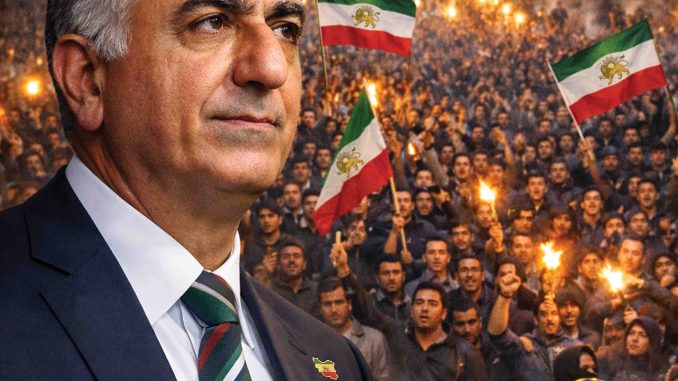
At the center of this transformation stands a name that no one can ignore anymore: Reza Pahlavi.
For years he was treated as a symbolic figure of the past. Today, he has become a real political actor in the present — one who is shaping the language, direction, and international perception of Iran’s pro-democracy movement.
Why Reza Pahlavi Matters Now
For Iran’s younger generation, Reza Pahlavi is not about nostalgia. He represents something far more important:
a clean break from the Islamic Republic without falling into chaos.
He offers what most Iranians have not seen in 46 years:
No religious ideology
No revolutionary extremism
No history of repression
A secular, democratic vision
A bridge to the international community
In a society exhausted by clerics, generals, and failed reformers, this matters.
His messages—seen by millions—have done something no other opposition figure has been able to achieve:
they gave the protests direction.
Not just rage, but purpose.
Not just anger, but unity.
From Symbol to Political Center
Until recently, Reza Pahlavi was viewed mainly as a moral voice for democracy. That has changed.
Today:
He is in active contact with Western policymakers
He speaks to international media as a political leader
He discusses transition, governance, and post-Islamic Republic Iran
That is exactly what Western governments look for:
a recognizable, rational, non-radical alternative.
The world does not want an Iranian collapse.
It wants an Iranian transition.
Reza Pahlavi fits that role.
The United States and Iran’s Future
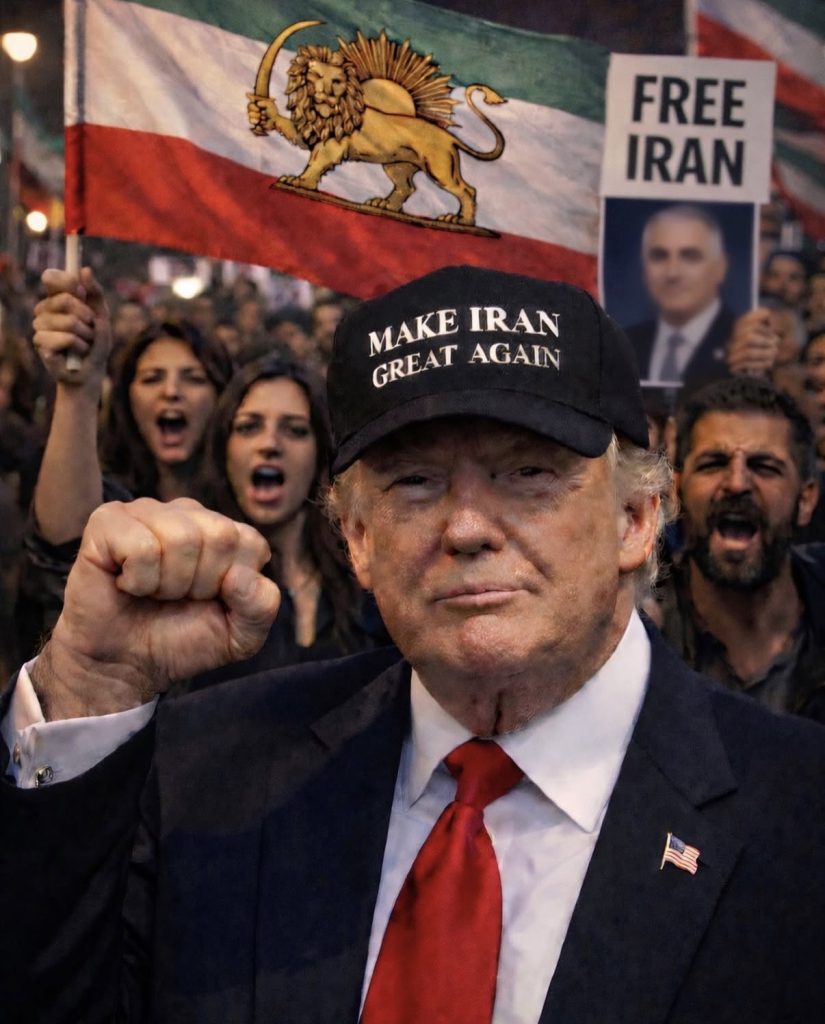
The Islamic Republic is no longer stable.
But the U.S. has always feared what comes after.
Supporting Reza Pahlavi changes that calculation.
He represents:
Continuity without dictatorship
Stability without clerical rule
National identity without religious extremism
If the U.S. chooses to move from passive observer to active supporter, it does not need to send troops. It only needs to:
Isolate Iran’s leadership
Sanction the commanders of repression
Block financial networks of the regime
Recognize a legitimate democratic alternative
That alone could break the system.
Israel’s Strategic Interest
For Israel, the Islamic Republic is an existential threat.
An Iran without revolutionary ideology is a radically different country:
No nuclear blackmail
No regional proxy wars
No calls for Israel’s destruction
An Iran led by a secular, nationalist, pro-West leadership would transform the Middle East.
That is why Israel quietly favors a transition — not chaos, but replacement.
And again, Reza Pahlavi fits that model.
Why This Moment Is Different
Iranian history is full of uprisings that failed.
This one is different for three reasons:
The regime has lost moral authority.
People no longer fear it, believe it, or respect it.There is now a political center of gravity.
For the first time, many Iranians see Reza Pahlavi as a unifying figure.Global powers have a clear alternative.
The world is no longer forced to choose between dictatorship and chaos.
The Three-Way Pressure
The Islamic Republic now faces something it has never faced before:
A population in revolt
A leadership alternative
International pressure that could align behind that alternative
This triangle is dangerous for any authoritarian system.
Conclusion
Iran is not just fighting a regime.
It is fighting for a future.
Reza Pahlavi is no longer a memory — he is a political force.
The United States and Israel are no longer distant observers — they are potential enablers of change.
The question is no longer if Iran will change.
The question is how, and who will shape what comes next.
And for the first time in decades, that answer is no longer written only in Tehran — it is being written on the world stage.