
By: Fatemeh Pouresmaeil
Journalist
2/7/2026
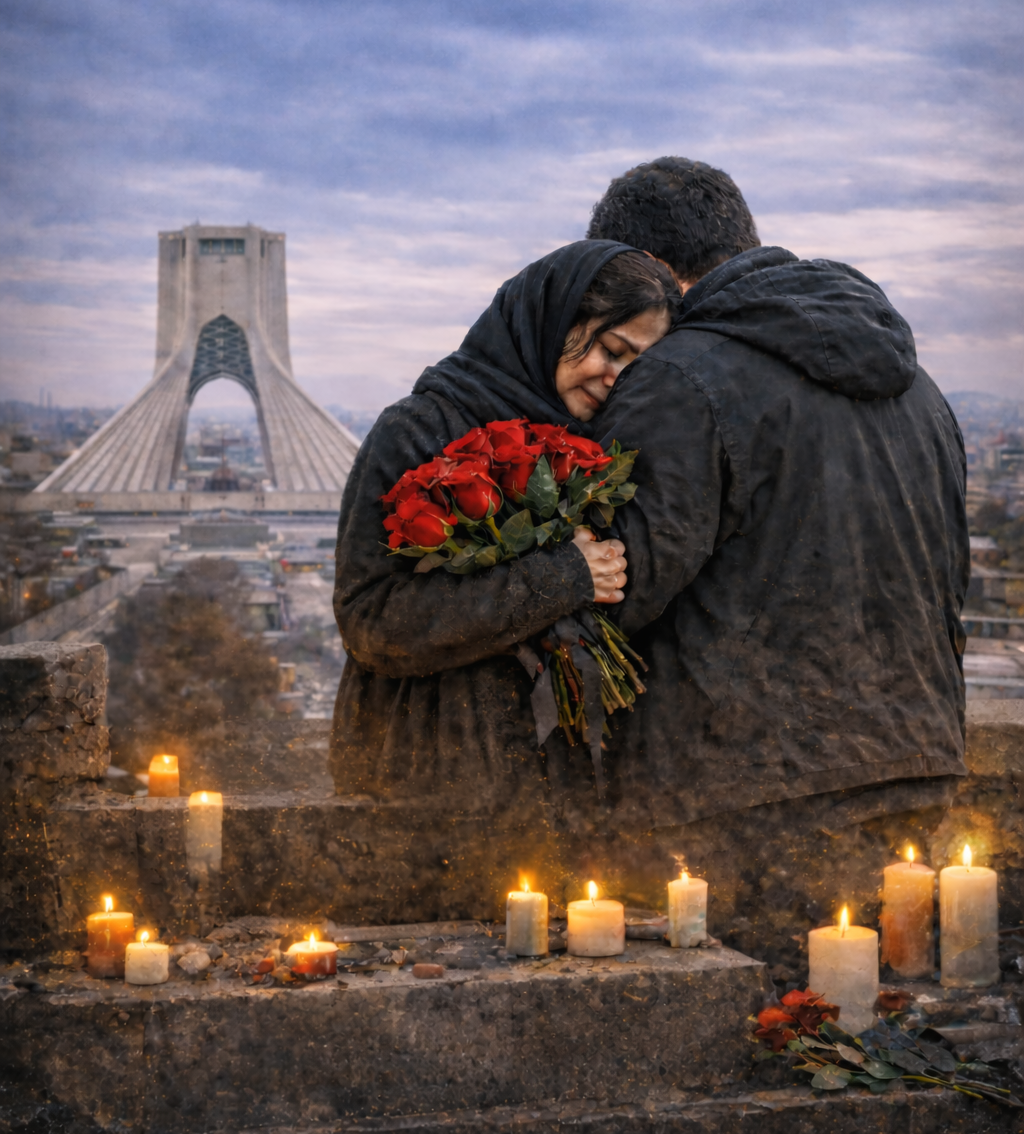
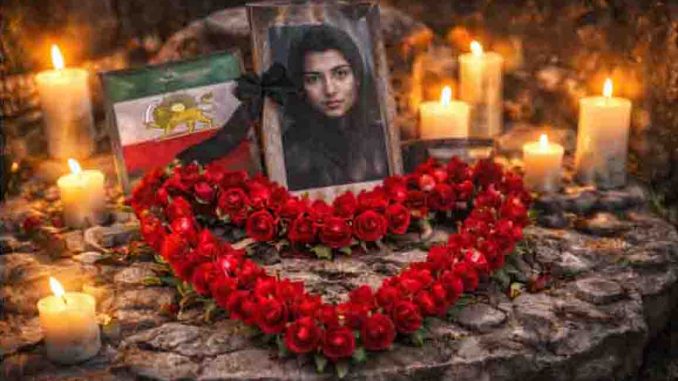
As Valentine’s Day approaches—a day celebrated around the world as a symbol of love, closeness, and shared joy—Iranian hearts remain heavy. This year, red roses and heart-shaped gifts are overshadowed by grief, loss, and unanswered questions. For many Iranians, both inside the country and across the diaspora, Valentine’s Day arrives not with excitement, but with sorrow.
Thousands of families continue to mourn loved ones who have been killed, imprisoned, or injured. Countless parents still wait for news. Countless homes remain silent. In such times, one question echoes through our communities:
Can we celebrate love when a nation is in mourning?
Love in a Time of Pain
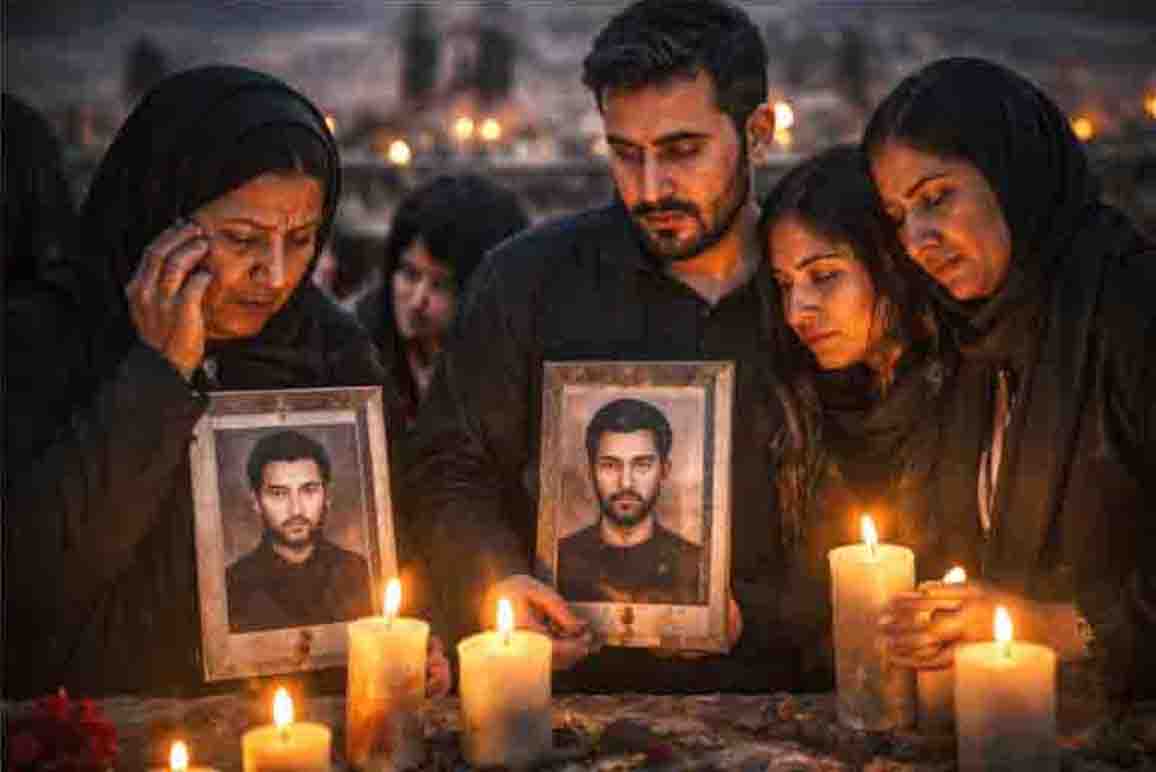
Valentine’s Day is meant to honor affection, partnership, and emotional connection. But when streets are filled with memories of young lives lost, when social media is flooded with photographs of victims and prisoners, and when fear and uncertainty dominate daily life, celebration feels unnatural—almost painful.
For many, even passing by shop windows decorated with hearts and flowers brings discomfort. It highlights the gap between the world’s expectations and our lived reality.
We are not merely individuals grieving. We are a collective soul in mourning.
A Nation in Silent Grief
Today, Iranians are experiencing what psychologists call collective trauma. People continue to work, study, and carry on with daily routines, yet emotionally they remain exhausted.
They go to work, but without energy.
They speak, but without enthusiasm.
They smile, but without true joy.
In the diaspora, many live in safety, yet mentally remain in Iran. News is followed obsessively. Sleep is restless. Anxiety is constant. Productivity declines. Motivation fades.
This is not physical fatigue. It is emotional exhaustion.
Economic Pain in the Community
Grief does not stay confined to hearts. It spreads into livelihoods.
Iranian grocery stores are emptier.
Restaurants see fewer customers.
Cafés grow quieter.
Concerts are canceled.
Cultural events disappear.
Many Iranian-owned businesses—built through decades of hard work—are now struggling. Not because of poor management, but because people no longer feel capable of celebrating.
When hope weakens, joy is the first expense to be cut.
Should Life Stop?
This leads us to the most difficult question:
Should life stop during times of tragedy?
Is continuing to live normally a betrayal of those who suffered?
There is no simple answer.
Respect for victims demands awareness and responsibility. Pretending that everything is fine is wrong. Ignoring pain is immoral.
Yet complete paralysis is also dangerous.
Oppressive systems thrive on despair. They benefit when societies become hopeless, exhausted, and emotionally broken.
If an entire nation gives up, darkness wins.
Redefining Love
Perhaps this year, Valentine’s Day needs a new meaning.
Love is not only flowers and gifts.
Love is not luxury dinners and social media posts.
Love is staying when times are hard.
Love is listening without judgment.
Love is offering comfort without expecting return.
Love is standing beside each other in uncertainty.
This year, Valentine’s Day can become a day of solidarity.
A reminder that we are still human.
That we still care.
That we still matter to one another.
Quiet Respect, Not Indifference
Some will choose not to celebrate this year. That deserves respect. Others may mark the day privately—with a simple message, a small gift, a sincere embrace. That is also meaningful.
The issue is not whether we celebrate or not.
The issue is whether we remain conscious and compassionate.
If we celebrate, let it be with awareness.
If we refrain, let it be with hope—not despair.
Supporting Our Community
Every Iranian—inside or outside the country—is part of our collective spirit.
If we all grow silent, that spirit weakens.
Supporting Iranian businesses today is not merely economic—it is moral.
Keeping cultural spaces alive is resistance.
Every shop that stays open, every artist who keeps creating, every entrepreneur who refuses to give up is preserving the soul of our community.
Even a small purchase can be an act of solidarity.
Family as Refuge
In times of uncertainty, family becomes sanctuary.
A place to breathe.
A place to cry.
A place to heal.
A place to survive.
Valentine’s Day can be an opportunity to say:
“I am here for you—no matter how dark it gets.”
To spouses.
To parents.
To children.
To friends.
Life Must Continue—with Dignity
We must not forget.
We must not normalize injustice.
We must not silence memory.
But we must continue.
With responsibility.
With awareness.
With compassion.
Not with recklessness.
Not with denial.
Not with selfishness.
But with dignity.
Final Message
This year’s Valentine’s Day may be the quietest in our history.
It may be the saddest.
It may be the most restrained.
Yet it can also be the most meaningful.
Love that survives hardship is real.
A nation that stands together in grief is unbreakable.
Let us protect one another.
Let us keep hope alive.
Let us refuse to surrender to darkness.
Because even in the deepest night,
light begins with a single heart that still believes.