
Fatemeh Pouresmaeil
journalist
3/5/2026
In recent weeks, many Iranians—both inside Iran and across the diaspora—have found themselves experiencing a deeply complex and painful emotional reality.
On one hand, there is hope. Hope that the current conflict may eventually lead to the end of the Islamic Republic and open the door to a new future for Iran.
On the other hand, there is profound anxiety and sorrow. Fear for loved ones inside the country. Uncertainty about Iran’s future. Concern over the destruction that war inevitably brings.
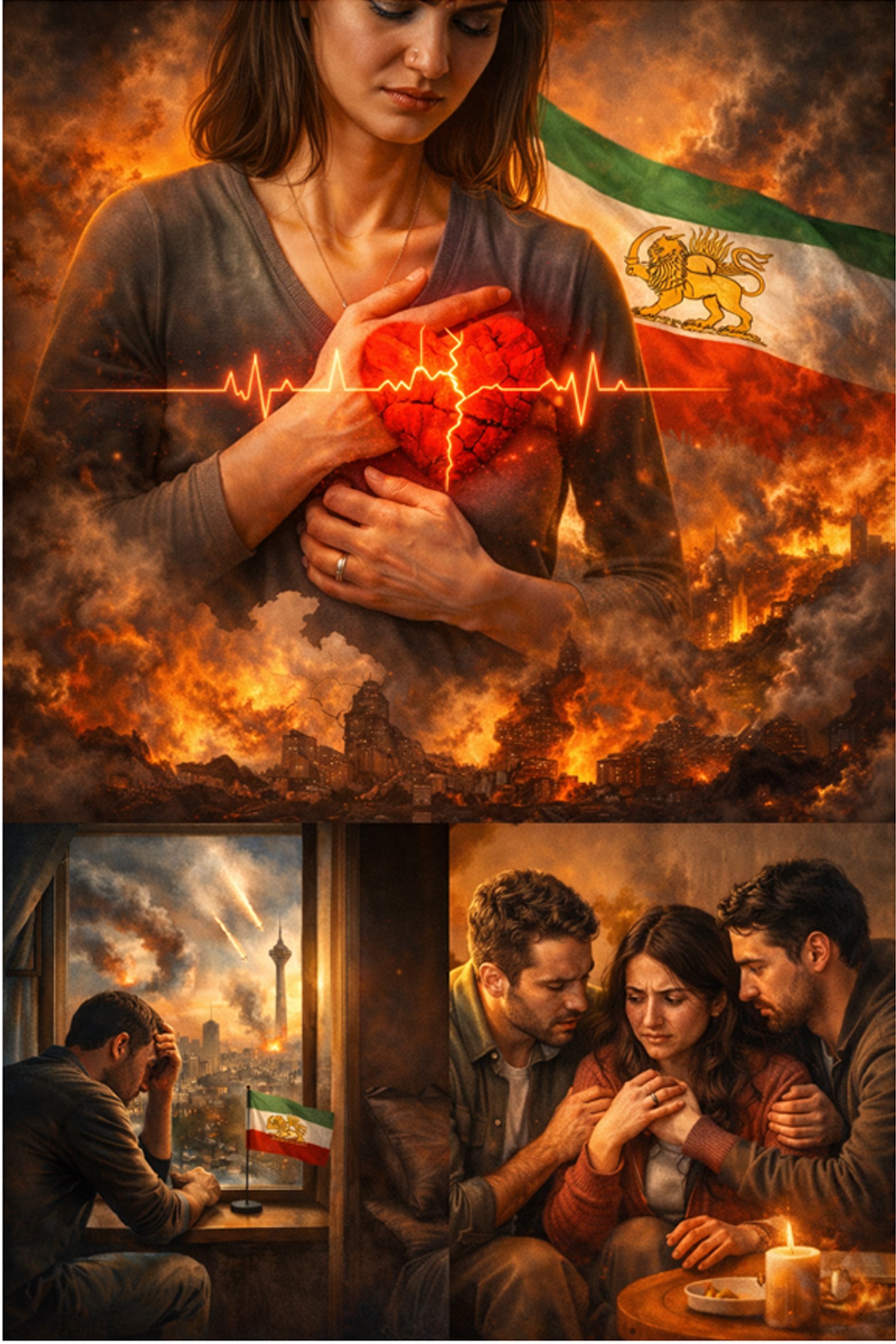
This emotional contradiction—hope mixed with fear and grief—has placed many people under immense psychological pressure. Doctors and psychologists warn that in such situations, a medical condition known as “Broken Heart Syndrome” can occur.
It is not merely a metaphor. It is a real and medically recognized condition that can temporarily weaken the heart.
What Is Broken Heart Syndrome?
Broken Heart Syndrome, medically known as Takotsubo Cardiomyopathy, is a temporary heart condition triggered by extreme emotional or physical stress.
The syndrome was first identified in Japan and was named after a traditional octopus trap called “takotsubo,” because during the condition the heart’s shape resembles that pot.
Patients experience symptoms that look very similar to a heart attack, including severe chest pain and shortness of breath. However, unlike a traditional heart attack, the arteries are usually not blocked.
Instead, a surge of stress hormones temporarily stuns the heart muscle.
Why Many Iranians May Be Experiencing It Now
Today, millions of Iranians are living through an extraordinary emotional moment in history.
For many in the diaspora, the situation is deeply personal:
• Hope for political change
• Fear of war escalation
• Anxiety for family members in Iran
• Emotional exhaustion from constant news coverage
• Feelings of helplessness while watching events unfold from afar
This emotional overload creates the perfect conditions for intense psychological stress.
Ironically, even strong positive emotions—such as relief, excitement, or sudden hope—can trigger the syndrome when combined with anxiety.
In other words, the heart can be overwhelmed by too much emotion in any direction.
Symptoms of Broken Heart Syndrome
The symptoms often resemble those of a heart attack and should always be taken seriously.
Common signs include:
• Sudden chest pain
• Shortness of breath
• Irregular heartbeat
• Severe fatigue or dizziness
• Pressure in the chest
• Intense anxiety
Anyone experiencing these symptoms should seek medical attention immediately.
The Role of War and Constant News Exposure
One of the greatest psychological burdens during war or political crises is the constant flood of information.
Social media, television broadcasts, and online news deliver updates every minute: explosions, casualties, political statements, rumors, and analysis.
The human brain was never designed to process such an endless stream of stress.
When the body remains in a constant state of alarm, stress hormones like adrenaline and cortisol rise dramatically. Over time, this can place real strain on the heart.
How to Protect Your Emotional Health
Doctors and mental health experts emphasize that maintaining emotional balance during crises is essential.
Several simple actions can help protect both the mind and the heart.
Limit News Consumption
Staying informed is important, but checking the news every few minutes can increase anxiety. Setting specific times to catch up on news can help reduce emotional overload.
Talk to Friends and Family
Human connection is one of the most powerful ways to relieve stress. Sharing concerns and emotions with others can lighten the psychological burden.
Continue Daily Life
In times of crisis, some people feel paralyzed and unable to continue their routines. However, maintaining normal activities—work, exercise, reading, or even a simple walk—can stabilize mental health.
Care for the Body
Sleep, balanced nutrition, and physical movement all contribute to emotional resilience.
Seek Professional Help
If anxiety, insomnia, or emotional distress becomes overwhelming, speaking with a therapist or counselor can provide valuable support.
Even in Dark Times, Hope Lives
History shows that nations often find their future in the most difficult moments.
The Iranian people today carry both hope and sorrow in their hearts—hope for freedom and fear for the cost it may require.
But one truth remains important:
A society that hopes to build a better future must also protect the health and strength of its people.
And sometimes, in the middle of chaos, the most courageous act is simply to remain calm, stay connected, and keep moving forward.