
Shahbod Noori
Editor-in-Chief
Tehran Weekly Magazine
Last week, as FIFA club soccer events began and one of the most anticipated matches was held in Los Angeles, thousands of Iranians from across California and beyond gathered to enjoy the game and support their favorite teams. Alongside the excitement of world-class soccer, many Iranian-Americans attended carrying the Lion and Sun flag and expressing their opposition to the Islamic Republic. Their presence was yet another reminder that the pain of Iran remains alive in the hearts of many, even thousands of miles away from their homeland.
Protest is a fundamental right. Every person has the right to speak out against oppression, corruption, injustice, and violence. No one can expect a people who have endured decades of imprisonment, executions, discrimination, economic hardship, and political repression to remain silent. The frustration and anger felt by many Iranians are understandable.
Yet among the videos and reports that emerged from these gatherings, something caught my attention beyond the protests themselves. It was the language. Some individuals directed deeply offensive insults toward other Iranians. In some cases, the rhetoric crossed the line from political opposition into personal humiliation and verbal abuse.
That raises an important question:
What makes us different from the Islamic Republic?
For nearly half a century, the Islamic Republic has often responded to criticism with intimidation, insults, exclusion, and attempts to silence opposing voices. Many of us left Iran because we rejected that culture. Many lost loved ones, careers, opportunities, and even their freedom because they dared to think differently.
If we adopt the same methods against those with whom we disagree, can we honestly claim moral superiority?
We should remember that many young Iranians alive today were born under the Islamic Republic. They did not choose the system they inherited. Many of them are victims of the same government we criticize. Some may live in Iran, others may travel between countries, and many may have different political opinions. Disagreement alone should never justify hatred or humiliation.
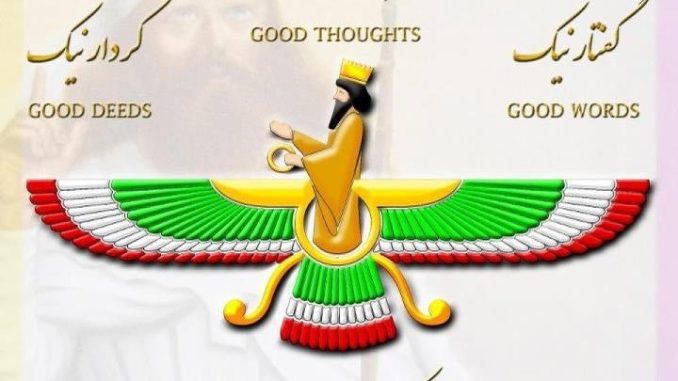
As Iranians, we have long taken pride in a civilization built on values far older than any modern government. One of the most cherished principles of our heritage comes from the teachings of Zoroaster: “Good Thoughts, Good Words, Good Deeds.”
Yet sometimes, in moments of anger and frustration, we seem to forget those principles.
Can we protest without vulgarity?
Can we oppose a government without dehumanizing people?
Can we express outrage without abandoning dignity?
The answer should be yes.
In fact, the strongest movements in history have often been those that maintained their moral standards even while confronting injustice. True strength is not measured by the volume of our anger but by our ability to remain principled when emotions run high.
This does not mean remaining silent in the face of wrongdoing. It does not mean ignoring those who have committed crimes against the Iranian people. Those responsible for corruption, oppression, violence, and human rights abuses should be held accountable. Justice matters. Accountability matters.
But justice is not the same as revenge.
Accountability is not the same as hatred.
And protest is not the same as abuse.
The Iranian community outside Iran has become one of the most successful immigrant communities in the world. Iranian doctors, engineers, entrepreneurs, academics, artists, and business owners have earned respect through hard work, education, and perseverance. They have helped build a positive image of Iranians in countries across the globe.
Protecting that reputation is a responsibility we all share.
If our goal is to build a free, democratic, and prosperous Iran, then that future begins with our behavior today. We cannot speak of freedom tomorrow while promoting intolerance today. We cannot advocate for human rights while denying basic respect to those who disagree with us.
The future of Iran will require dialogue, cooperation, and national reconciliation. It will require people with different backgrounds, experiences, and political views to sit at the same table and work together. That future cannot be built upon the language of insults and division.
Perhaps the greatest test of any movement is not how it treats its friends, but how it treats those it opposes.
The Islamic Republic has spent decades attempting to divide Iranians into categories: insiders and outsiders, loyalists and enemies, believers and traitors. We should not repeat that mistake. We should not create new walls among ourselves when our nation already carries enough scars.
Instead, let us demonstrate that there is another way.
Let us show the world that we can oppose tyranny without becoming tyrannical.
Let us prove that we can defend our beliefs without abandoning our values.
Let us remember that dignity is not weakness, respect is not surrender, and civility is not compromise.
The road toward a better Iran will not be easy. There will be disagreements, frustrations, and moments of intense emotion. But every generation is ultimately judged not only by what it fought against, but by what it stood for.
Maybe we cannot remove every thorn from the path ahead.
But we can choose not to plant new ones.
And perhaps our greatest victory will come when we show that, despite everything we have endured, we refused to become like those who caused so much pain in the first place.