
By Shahbod Noori
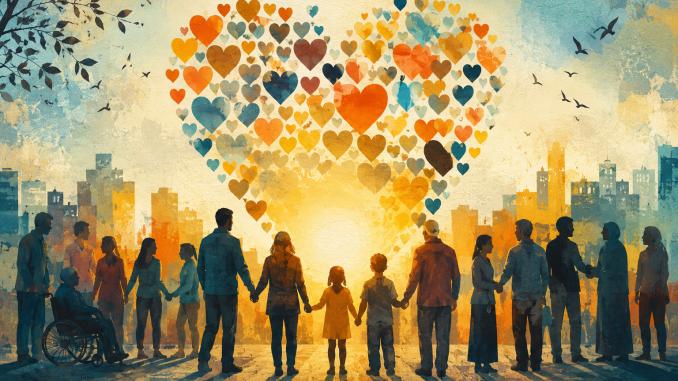
The world has changed at an extraordinary pace over the past few years. Wars, economic uncertainty, migration, rapid technological advances, and shifting lifestyles have transformed the way people live and interact. Ironically, while we are more connected than ever through smartphones and social media, many people report feeling lonelier than ever before. Perhaps the greatest shortage of our time is not technology, wealth, or opportunity—it is empathy.
Empathy does not mean agreeing with everyone or accepting every opinion. It means making a sincere effort to understand another person’s perspective and recognizing that every individual carries experiences, struggles, and hopes that may not be visible on the surface. When empathy disappears, small disagreements can quickly grow into deep divisions, and meaningful conversations are replaced by misunderstanding and conflict.
The Iranian community, both inside Iran and across the world, is no exception. Millions of Iranians now live in different countries, bringing with them diverse experiences, beliefs, and ideas. Differences of opinion are natural and even healthy in any vibrant community. The real challenge is learning how to respect those differences without allowing them to divide us. A successful community is not built solely by talented individuals; it is strengthened by people who support one another despite their differences.
Empathy begins at home. Many family conflicts are not caused by a lack of love but by a lack of listening. Parents and children often struggle to understand each other’s perspectives, while couples sometimes become so focused on expressing their own feelings that they forget to hear those of the other person. Sometimes, the greatest gift we can offer someone is simply our time and attention. A few moments of genuine listening can prevent years of misunderstanding.
The workplace also benefits greatly from empathy. Leaders who understand the challenges faced by their employees often build stronger, more loyal teams. Colleagues who stand beside one another during difficult times create environments built on trust and cooperation. The most successful organizations are rarely driven by financial resources alone; they thrive because they invest in people, encourage mutual respect, and foster healthy relationships.
History has repeatedly shown that empathy shines brightest during times of crisis. Whether communities face natural disasters, public health emergencies, or economic hardship, ordinary people often step forward to help complete strangers. These moments remind us that kindness remains one of humanity’s greatest strengths. Compassion has the power to inspire hope, restore dignity, and unite people when fear and uncertainty threaten to pull them apart.
Empathy should never be mistaken for weakness. It does not require us to ignore injustice or abandon our principles. We can firmly defend our values while still treating others with respect and dignity. Civil disagreement is far more productive than hostility, and societies that encourage respectful dialogue are better equipped to solve problems and move forward together.
Each of us has the ability to strengthen our communities through simple daily actions. A smile, a phone call to an old friend, helping a neighbor, offering encouragement, or taking a few moments to truly listen to someone can make a meaningful difference. Small acts of kindness often create ripple effects that extend far beyond what we can see.
As our world becomes increasingly fast-paced and interconnected, empathy becomes even more essential. Technology can connect devices, but only compassion can connect hearts. Progress should not be measured solely by economic growth or scientific achievements, but also by how we care for one another.
Perhaps what the world needs most today is not more innovation, but more understanding. If each of us chooses to practice empathy in our daily lives, we can build stronger families, healthier communities, and a brighter future for generations to come. Empathy is a language understood across every culture, every faith, and every border—and it may be one of the most powerful tools we possess for creating a more peaceful and united world.