
“I’m always tired.” “My hair is falling out more than before.” “I get short of breath when I climb the stairs.” “Sometimes my heart suddenly starts racing.”
These are common complaints among women and are often blamed on stress, lack of sleep, a busy schedule, or simply getting older. But sometimes the real cause is a very common condition: iron deficiency and iron-deficiency anemia.
Iron is an essential mineral the body needs to produce hemoglobin, the protein in red blood cells that carries oxygen from the lungs to tissues throughout the body. When iron stores become too low, the body may not be able to produce enough healthy red blood cells. As a result, the brain, muscles, and other organs may receive less oxygen.
Women are particularly vulnerable to iron deficiency because of menstruation, pregnancy, and certain medical conditions. Importantly, iron deficiency can sometimes cause symptoms even before full anemia develops.
Why Is Iron Deficiency So Common in Women?
One of the most common causes is blood loss during menstruation. Women who have very heavy or prolonged periods can lose a significant amount of iron month after month.
Pregnancy also increases the body’s need for iron because the mother’s blood volume expands and additional iron is required to support the developing baby.
But menstruation and pregnancy are not the only causes. A diet low in iron, difficulty absorbing nutrients, previous gastrointestinal surgery, and hidden internal bleeding can also lead to iron deficiency.
What Are the Symptoms?
Symptoms vary depending on how severe the deficiency is and how long it has been present. In the early stages, a woman may have few or no noticeable symptoms.
As iron levels continue to fall, symptoms may include:
- Persistent fatigue and low energy
- General weakness
- Pale skin
- Shortness of breath during activity
- Heart palpitations
- Headaches or dizziness
- Cold hands and feet
- Difficulty concentrating
- Brittle nails
- Hair loss
When anemia becomes more severe, even ordinary activities that were once easy may leave a person unusually tired or breathless.
Hair Loss Is Not Always About Shampoo
Hair loss is one of the most common concerns among women. There are many possible causes, including thyroid disorders, hormonal changes, stress, genetics, and certain medications.
Iron deficiency is another possible contributor. For this reason, a physician may check iron levels when evaluating unexplained hair loss.
However, taking iron supplements without testing is not a good solution. The first step is determining whether an iron deficiency actually exists.
Don’t Assume Heavy Periods Are “Normal”
Some women experience heavy menstrual bleeding for years and assume it is simply normal for them.
If you need to change menstrual products unusually frequently, your period lasts longer than expected, you pass large blood clots, or bleeding interferes with sleep and normal daily activities, talk to your healthcare provider.
Fibroids, hormonal problems, certain bleeding disorders, and other medical conditions can cause excessive menstrual bleeding.
Treating the anemia without addressing the cause of the blood loss may allow the problem to return again and again.
Iron-Deficiency Anemia After Menopause Deserves Attention
Once menopause has occurred, monthly menstrual blood loss is no longer expected. Therefore, a new diagnosis of iron deficiency or iron-deficiency anemia in a postmenopausal woman should prompt an evaluation for the underlying cause.
Sometimes small amounts of hidden bleeding from the gastrointestinal tract can gradually lower iron levels. Stomach ulcers, certain medications, intestinal polyps, and other gastrointestinal conditions are among the possible causes.
This does not automatically mean cancer is present. However, unexplained iron-deficiency anemia after menopause should not simply be covered up by taking iron tablets without investigating why it developed.
Diagnosis Often Begins With a Simple Blood Test
A complete blood count (CBC) measures hemoglobin and provides information about the number and characteristics of red blood cells.
A healthcare provider may also order a ferritin test, which helps evaluate the body’s iron stores.
If iron deficiency is confirmed, the next important question is:
Why is the iron low?
Depending on the woman’s age, menstrual history, diet, symptoms, and medical background, additional testing may be necessary.
Which Foods Provide Iron?
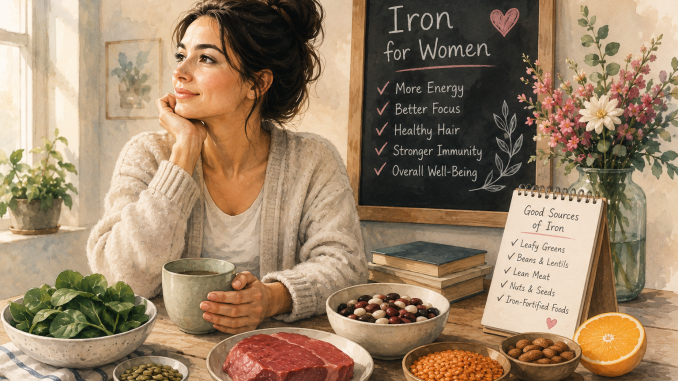
Iron is available in both animal and plant foods. Good sources include:
- Lean red meat
- Poultry and fish
- Lentils
- Beans and chickpeas
- Dark leafy green vegetables
- Iron-fortified cereals and grains
- Certain nuts and seeds
Iron from animal sources is generally absorbed more easily by the body.
Vitamin C can improve the absorption of iron from plant foods. Combining lentils or beans with foods such as oranges, kiwi, tomatoes, or bell peppers can therefore be helpful.
What About Coffee and Tea?
Coffee and tea contain compounds that can reduce iron absorption, particularly when consumed at the same time as iron-rich meals or iron supplements.
Women being treated for iron deficiency should ask their physician or pharmacist about the appropriate timing of iron supplements in relation to coffee, tea, other medications, and certain foods.
Should Every Woman Take an Iron Supplement?
No.
This is one of the most important points to remember. More iron is not always better.
Unnecessary iron supplements can cause constipation, nausea, abdominal discomfort, and other side effects. Excessive accumulation of iron can also be harmful.
Iron supplements should generally be taken when testing and medical evaluation indicate they are needed.
How Long Does Treatment Take?
Even after hemoglobin returns to normal, the body’s iron stores may not yet be fully restored. For this reason, a physician may recommend continuing treatment for a period after the anemia has improved.
Some people have difficulty tolerating oral iron because of constipation or stomach problems. Rather than stopping treatment without guidance, speak with your healthcare provider. The type of iron, dose, or schedule may be adjusted.
In certain cases, intravenous iron may be recommended.
When Is Urgent Medical Attention Needed?
Ordinary fatigue is generally not an emergency. However, severe shortness of breath, chest pain, fainting, a very rapid heartbeat, or extreme weakness requires prompt medical evaluation.
Blood in the stool, unusual black stools, vomiting blood, or severe active bleeding should also be evaluated immediately.
Preventing Iron Deficiency
For many women, simple habits can make a difference.
Eat a balanced diet that regularly includes iron-rich foods. Do not ignore unusually heavy menstrual bleeding.
During pregnancy, follow recommended blood testing and take supplements as directed by your healthcare provider.
Women following vegetarian or vegan diets should pay particular attention to obtaining adequate iron and other essential nutrients.
Most importantly, if you have persistent fatigue, unexplained shortness of breath, heart palpitations, dizziness, or unusual hair loss, consider medical evaluation rather than assuming stress is the cause.
Final Thoughts
Sometimes the body sends small signals that something is missing. Constant fatigue, pale skin, hair loss, or becoming breathless after climbing a few stairs may be more than the result of a demanding week.
Iron deficiency is common among women and is often straightforward to diagnose and treat. But identifying why the deficiency developed is just as important as replacing the missing iron.
Heavy menstrual bleeding, anemia that appears after menopause, or iron deficiency that repeatedly returns deserves careful medical evaluation.
Sometimes a simple blood test can finally explain months of exhaustion and low energy. Paying attention to these signals matters—because feeling exhausted all the time should never automatically be accepted as a normal part of being a woman.