
by Shahbod Noori
9/14/2026
Breaking News
A false death announcement may earn someone a few clicks, but it can terrify an artist, devastate a family, and expose a troubling habit in our social-media culture.
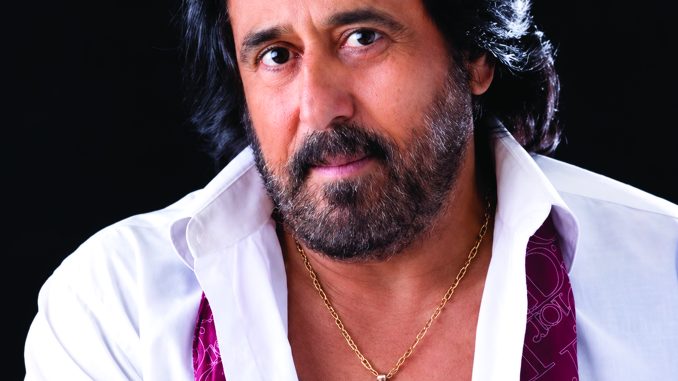
Last week, once again, a disturbing rumor began circulating across Persian-language social media: Shahram Shabpareh, one of the most recognizable and beloved figures in Iranian pop music, had supposedly passed away.
Photos appeared. Condolences followed. Some people wrote “Rest in peace.” Others shared old songs and memories. And within hours, the rumor traveled from one page to another, from Instagram accounts to Telegram groups, WhatsApp chats and private messages.
There was only one major problem:
Shahram Shabpareh is alive.
There is no credible confirmation of his death, and the latest rumor appears to be yet another false report involving a well-known Iranian artist.
Unfortunately, this is not the first time.
Every year, it seems, one or more famous Iranian singers, actors or cultural figures are suddenly declared dead on social media—often without a single reliable source.
And that raises a much more uncomfortable question:
Why are we so quick to believe it?
And perhaps more importantly:
Why are we so eager to share it?
A Death Can Be Invented in Seconds
Today, creating a false death announcement takes almost no effort.
Find a photograph.
Turn it black and white.
Add a candle.
Write “Rest in Peace.”
Post it.
Within minutes, hundreds of people may begin sharing it without checking whether it is true.
But have we ever stopped to think about what happens on the other side of that screen?
Imagine being the child of an artist and suddenly seeing a photograph of your father or mother accompanied by the words “passed away.”
Imagine an elderly relative receiving dozens of condolence calls before anyone has had the chance to explain that the person is perfectly alive.
Imagine friends calling one another in panic.
Imagine the artist himself opening his phone and discovering that thousands of people are mourning his death.
For the person who created or shared the post, it may be nothing more than another piece of social-media content.
For a family, however, it can cause genuine fear, anxiety and emotional pain.
That is not entertainment.
And it certainly is not journalism.
Are We Waiting for Our Artists to Die?
Perhaps we need to ask ourselves some uncomfortable questions.
Are we actually waiting for this kind of news?
Why does the death of an artist—even an unconfirmed death—travel faster than news about that artist’s accomplishments?
Why do people who may not have written a single sentence about an artist for years suddenly publish photographs, memories and tributes the moment they hear that he or she has supposedly died?
Why are we sometimes better at mourning our artists than appreciating them?
There is something deeply wrong with a culture that waits until someone is gone before discovering how valuable that person was.
Maybe we should learn to give people flowers while they can still see them.
Maybe we should say “thank you” while they can still hear us.
Shahram Shabpareh: A Man Who Made Generations Dance
Shahram Shabpareh is far more than simply another Iranian singer.
His name belongs to the history of modern Iranian pop music.
Growing up in Tehran in a musical environment, he began performing at a young age and first became known as a drummer before developing into a singer, songwriter, composer and entertainer.
During the formative years of modern Persian pop music, Shabpareh became associated with a generation of musicians who were transforming the sound of Iranian popular culture.
His early career included the band The Rebels, and his musical history is also closely connected with the Black Cats, founded by his brother Shahbal Shabpareh. Artists who later became major names in Persian music—including Ebi and Siavash Ghomayshi—were part of the broader musical world surrounding those pioneering years.
But Shahram had something particularly distinctive.
He took happiness seriously.
That may sound like a simple statement, but it is not.
Iranian society has lived through revolution, war, political upheaval, exile, immigration and decades of separation between families.
Millions of Iranians have experienced the sadness of leaving a homeland, losing friends and relatives, or watching their children grow up thousands of miles away from the country of their parents.
And through many of those years, Shahram Shabpareh kept singing songs that encouraged people to dance, celebrate, laugh and fall in love.
His music did something extraordinarily important:
It made people feel good.
Perhaps not every song needed to carry a philosophical message.
Sometimes making a tired immigrant smile for four minutes is an achievement of its own.
From pre-revolutionary Tehran to post-revolutionary Los Angeles, from vinyl records and cassette tapes to CDs, satellite television, YouTube and social media, generations of Iranians have memories connected to his voice.
Weddings.
Parties.
Road trips.
Family gatherings.
New Year’s celebrations.
Summer nights.
For many Iranians, somewhere in those memories, a Shahram Shabpareh song is playing.
That is a remarkable cultural legacy.
Exile Could Not Silence the Music
The 1979 revolution transformed the lives of countless Iranian artists.
Many left the country and had to rebuild their careers abroad. Los Angeles eventually became one of the most important centers of Persian-language music outside Iran.
Shahram Shabpareh continued his career in the United States.
For an artist, immigration is much more than changing addresses.
An artist may lose the country that inspired him, the stages where he performed, the industry he understood and direct contact with much of his original audience.
Everything must be rebuilt.
Yet Shahram not only maintained the loyalty of his original fans, he became familiar to new generations of Iranian-Americans and Iranians throughout the diaspora.
Decade after decade, he performed, recorded music and remained part of Iranian popular culture.
In 2023, during what was presented as his farewell concert, he spoke about stepping away from professional performance after an extraordinary career.
But retirement does not erase an artist from people’s lives.
The performances may stop.
The music doesn’t.
Every Person With a Phone Is Now a Publisher
There was once a time when an ordinary person could reasonably say:
“I’m not a journalist. I just forwarded something someone sent me.”
Today, that excuse is becoming harder to accept.
If hundreds or thousands of people follow your social-media account, you have become a small media outlet whether you intended to or not.
If you forward information to groups containing hundreds of people, you participate in distributing that information.
With that ability comes responsibility.
Especially when the information involves someone’s death, illness, accident or personal tragedy.
Before sharing such news, take five minutes.
Search the person’s name.
Look at the artist’s official accounts.
Check statements from family or representatives.
Look at established news organizations.
See whether several independent and credible sources are reporting the same information.
If you cannot confirm it, do not share it.
There is no prize for being the first person to announce somebody’s death.
Sometimes the most responsible thing we can do on social media is simply not press Share.
What About the Family?
Behind every famous face is an ordinary family.
There may be a spouse, children, grandchildren, siblings and close friends.
They don’t see that person as a celebrity.
They see a father.
A mother.
A husband.
A wife.
A brother.
A sister.
A grandfather.
A friend.
When someone falsely announces the death of a celebrity, the artist is not necessarily the only victim.
The family can suffer first.
No child should have to receive frightened telephone calls asking whether his or her father has died because somebody wanted attention on social media.
No family should have to issue reassurance simply because an irresponsible person created a fake death announcement.
Fame does not eliminate a person’s right to dignity and peace.
Let Us Thank Them Before They Are Gone
Shahram Shabpareh does not need our condolences today.
He deserves our appreciation.
And so do the many veteran Iranian artists who are still among us.
Let us write about them while they are alive.
Let us listen to their music.
Let us celebrate what they have contributed to Iranian culture.
If one of their songs reminds us of our youth, tell that story today.
If their music helped us through difficult years of immigration, tell them today.
If we want to publish their photograph, perhaps the caption should simply say:
“Thank you for being part of our memories.”
There will unfortunately come a day when every one of us must say goodbye.
There is no reason to rush that day.
Shahram, It Is Not Time for Condolences
This article is not an obituary for Shahram Shabpareh.
It is exactly the opposite.
It is an opportunity to appreciate him while he is alive.
For decades, this man has entertained Iranians around the world. His songs have played at weddings, celebrations and family gatherings. His music has accompanied generations through some of the happiest moments of their lives.
So perhaps the best response to those who repeatedly manufacture premature deaths for our living artists is very simple:
Stop rushing.
There will always be time for condolences when that sad day truly comes.
Today, while our artists are alive, let us wish them health.
If we love them, let us say it now.
If they have given us beautiful memories, let us thank them now.
And the next time we see the words “BREAKING: Passed Away” beside the photograph of a beloved artist, perhaps we should keep our finger away from the Share button for just a few minutes.
Ask one question first:
Is it true?
Because behind that photograph is a real human being.
And behind that human being is a real family.
Those few seconds of hesitation before spreading an unverified tragedy may be one of the simplest expressions of humanity left to us in the age of social media.
Shahram Shabpareh is alive. Instead of offering premature condolences, let us wish him health, happiness and peaceful years ahead.
And perhaps we can extend the same courtesy to all our artists:
Love them while they are here.
Honor them while they can see it.
Thank them while they can still hear us.