
By Fatemeh Pouresmaeil
Journalist
breaking news
1/27/2026

In recent weeks, the global cosmetics brand Huda Beauty, founded by influencer and entrepreneur Huda Kattan, has come under intense criticism from Iranians around the world. A series of social media posts shared by the brand and its founder were widely perceived as aligning with the narratives of the Islamic Republic and ignoring the suffering of the Iranian people.
At a time when millions of Iranians are living under severe political repression, censorship, economic hardship, and widespread human rights violations, many expected influential figures and major brands to stand with the victims—not with the oppressors. Instead, what many saw from Huda Beauty was silence toward state violence and, in some cases, the promotion of one-sided political narratives.
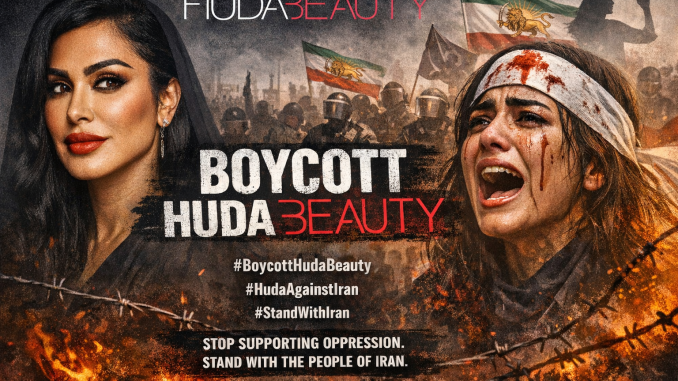
These actions quickly sparked outrage across social media platforms including Instagram, X (formerly Twitter), and TikTok. Thousands of users launched a grassroots campaign calling for a boycott of Huda Beauty products. Hashtags such as:
#BoycottHudaBeauty
#HudaAgainstIran
#StandWithIran
began trending among Iranian communities worldwide.
For many protesters, this movement is about more than makeup or brand loyalty. It is about moral responsibility. As a global public figure with millions of followers, Huda Kattan holds significant influence. Critics argue that remaining neutral—or appearing to support a repressive regime—amounts to indirect participation in injustice.
In response, many consumers have publicly announced that they will no longer purchase Huda Beauty products. Online retailers and beauty platforms have also reported noticeable declines in interest in the brand. This demonstrates how public opinion can affect even the most powerful global companies.
Iranian activists emphasize that this boycott sends a clear message to celebrities, influencers, and corporations alike:
“You cannot profit from the people while ignoring their pain.”
Today, Huda Beauty stands at a critical crossroads. Many are waiting to see whether the company will issue a transparent statement, acknowledge the concerns of the Iranian community, apologize for its actions, and express genuine solidarity with the people of Iran—or continue down a path of silence and indifference.
What remains certain is that Iranians do not forget easily. A nation that has spent decades fighting for freedom, dignity, and justice will not overlook betrayal or moral failure.