
By: Fatemeh Pouresmaeil
Journalist
03/16/2026
For centuries, the Bible has been more than just a religious book for many believers. Some historians, theologians, and political analysts have treated parts of it almost like a historical roadmap, searching its pages for clues about the future of nations.
Among the most debated passages are those that mention Persia—the ancient name for Iran—and other lands in the Middle East. In recent years, as tensions in the region have intensified, interest in these passages has grown dramatically.
Some believe these texts only describe events of the ancient world. Others argue that they contain prophetic warnings about events that may still unfold in the modern Middle East.
Below are seven of the most fascinating—and controversial—biblical passages that some interpreters believe refer to Iran and the future of the region.
1. Persia Appears in the Final Great War
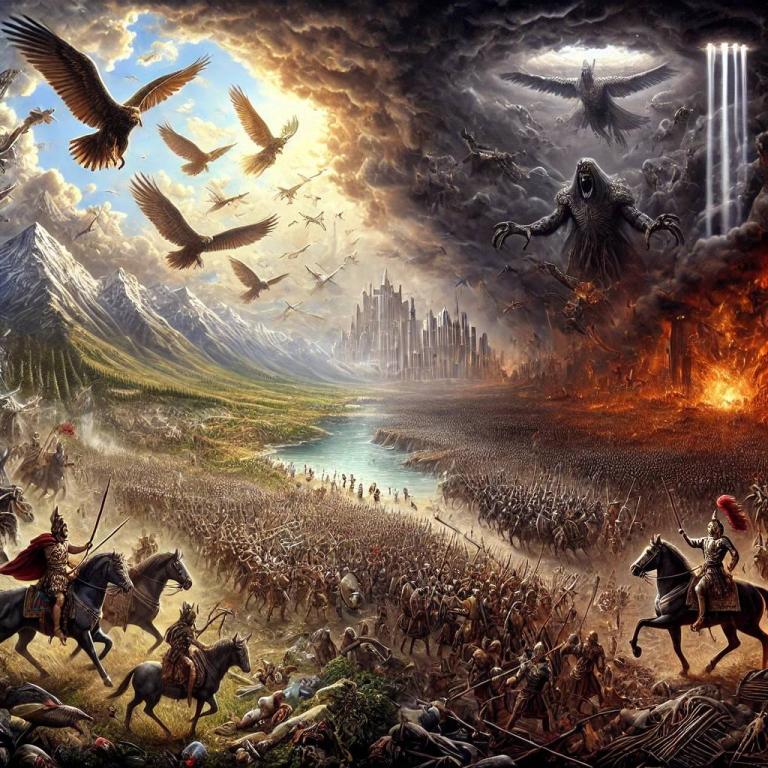
One of the most frequently cited passages appears in the Book of Ezekiel (chapters 38–39). In this section, a massive future conflict is described involving many nations.
Among them is a country called Persia.
Historically, Persia refers to the ancient empire that occupied the territory of modern Iran. Because of this, many interpreters believe the passage suggests that Iran will play an important role in a major future conflict in the Middle East.
This has led to endless debate among scholars and political commentators.
2. A Mysterious Alliance of Nations
In the same prophecy, several other regions are mentioned alongside Persia, including Gog, Magog, Cush, and Put.
Some biblical scholars believe these names symbolize different civilizations around the ancient world. Modern interpreters sometimes try to connect them to contemporary nations.
The controversial interpretation is that the text describes a large alliance of nations forming around the Middle East before a major confrontation.
Whether symbolic or literal, the passage continues to spark speculation.
3. The Fall of Oppressive Powers
Throughout biblical literature, there is a recurring theme: tyrannical empires eventually collapse.
Ancient texts describe the fall of powerful kingdoms such as Babylon, Assyria, and others that once dominated the region.
Many modern readers interpret these passages as a broader message: no regime built on repression lasts forever.
For people living in or watching the Middle East today, these verses often resonate as a reminder that history eventually turns against authoritarian power.
4. Liberation After a Dark Period
Another powerful theme in biblical prophecy is hope after suffering.
Several passages describe periods of war, chaos, and destruction, followed by a time of renewal and rebuilding.
Some commentators believe these sections symbolize the idea that after great upheaval in the Middle East, a period of freedom and reconstruction could follow.
For many readers, this is one of the most hopeful aspects of biblical prophecy.
5. Israel at the Center of Regional Events
Many prophetic passages place Israel at the center of geopolitical developments.
Because of its deep religious and historical significance, the land has long been seen as a focal point for spiritual and political conflict.
Some interpreters believe that the Bible suggests future global tensions may also revolve around this region, drawing surrounding nations—including Iran—into major confrontations.
This interpretation remains one of the most widely discussed among religious scholars.
6. The Defeat of Invading Armies
The prophecy of Gog and Magog describes forces gathering to attack a central land, only to suffer a dramatic and unexpected defeat.
In the narrative, the invading armies are ultimately destroyed—not simply by military strength but by extraordinary circumstances.
Many theologians interpret this story symbolically, representing the idea that aggressive powers eventually collapse under their own weight.
It is one of the most mysterious and debated prophetic passages in the Bible.
7. The Beginning of a New Era
After the turmoil described in these prophecies, the texts often shift to a different tone.
They speak of restoration, rebuilding cities, and a renewed sense of peace among nations.
Some interpreters believe these passages describe a new era following major upheaval in the Middle East, where societies move toward stability and prosperity.
Whether symbolic or literal, the message suggests that conflict is not the final chapter of history.
Are These Prophecies About Today?
One of the biggest debates among scholars is whether these passages truly describe future geopolitical events or simply reflect the struggles of ancient times.
Many theologians insist that the texts should be read symbolically or historically. Others believe the similarities between these ancient descriptions and modern tensions are too striking to ignore.
As a result, these prophecies continue to inspire intense discussion among religious thinkers, historians, and political observers around the world.
Final Thought
Regardless of interpretation, biblical texts remain some of the most influential writings in human history.
Their references to Persia, Israel, and surrounding regions remind us that the Middle East has always stood at the crossroads of faith, history, and politics.
Whether these passages are ancient poetry, symbolic warnings, or glimpses into the future is a question that continues to fascinate readers even today.