
Law for Everyone with Donya Noori
07/06/2026
Part One
By Donya Noori
Graduate of Southwestern Law School and Legal Professional with the Law Offices of Camellia Jalilvand
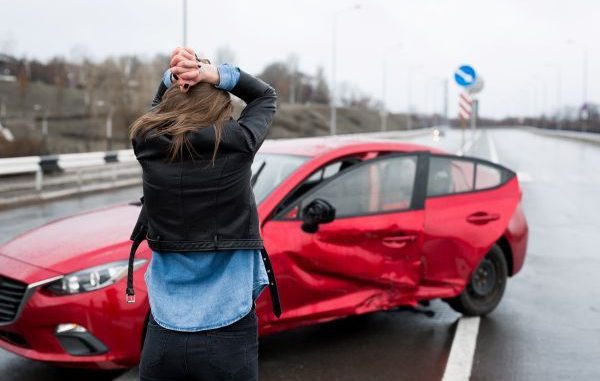
One of the most frightening situations any driver can experience is being involved in a car accident where the at-fault driver leaves the scene without stopping. In those moments, many victims immediately assume that because the other driver escaped, there is little or no chance of recovering compensation for their injuries or property damage.
Fortunately, that assumption is not always correct.
California law provides several legal protections and insurance options that may help victims of hit-and-run accidents recover compensation, even when the responsible driver cannot immediately be identified. However, these protections are often most effective when accident victims take the proper steps during the first few minutes and hours after the collision.
Understanding what to do—and what not to do—can make a significant difference in the outcome of your claim.
What Is a Hit-and-Run Accident?
Under California law, every driver involved in a traffic collision has certain legal responsibilities. Drivers are generally required to stop, exchange identifying information, provide reasonable assistance if someone is injured, and cooperate with law enforcement when necessary.
When a driver leaves the scene without fulfilling these legal obligations, the incident is commonly known as a Hit-and-Run accident.
The consequences for the fleeing driver depend on the circumstances. If only property damage occurred, criminal penalties may still apply. When injuries or fatalities are involved, however, leaving the scene can result in much more serious criminal charges.
Regardless of the driver’s actions, the victim still has important legal rights that should not be overlooked.
Your First Few Minutes Matter
The moments immediately following a hit-and-run accident are often confusing and emotional. It is completely normal to feel shocked, angry, or frightened.
Despite these emotions, your actions during the first few minutes can play a critical role in protecting your legal rights.
If possible, move your vehicle to a safe location without creating additional danger. Check yourself and your passengers for injuries. If anyone appears to be injured—or if you are unsure—call 911 immediately.
One mistake some victims make is attempting to chase the fleeing driver. Although this reaction is understandable, it can create additional safety risks and may even lead to another collision.
Instead of pursuing the vehicle, focus on protecting yourself and preserving evidence.
What If You Couldn’t Read the License Plate?
Many victims later say,
“Everything happened so fast. I never saw the license plate.”
Fortunately, failing to obtain the full license plate number does not necessarily mean your case is hopeless.
Even partial information can be valuable.
The vehicle’s color, make, model, body style, direction of travel, visible damage, or even a few numbers or letters from the license plate may help investigators identify the vehicle later.
Sometimes witnesses observe details that the victim misses because of the shock of the collision. If anyone saw the accident, politely ask for their name and contact information before they leave the scene.
Witness statements often become extremely valuable evidence during both police investigations and insurance claims.
Modern Cameras Can Become Silent Witnesses
Technology has dramatically changed the way hit-and-run accidents are investigated.
Throughout California, surveillance cameras are increasingly common. Shopping centers, gas stations, intersections, office buildings, apartment complexes, and even private homes may have security cameras that captured part of the accident.
In addition, many drivers now use dashboard cameras, commonly known as Dash Cams.
A few seconds of video footage can sometimes identify the fleeing vehicle, confirm how the collision occurred, or disprove inaccurate statements made later during the investigation.
If you notice nearby businesses or buildings equipped with security cameras, mention this information to the responding police officers as soon as possible. Many surveillance systems automatically overwrite recordings after only a few days.
Quick action may preserve valuable evidence that would otherwise disappear.
Why the Police Report Is So Important
Some accident victims mistakenly believe that contacting the police is pointless if the other driver has already escaped.
In reality, an official police report is often one of the most important documents in a hit-and-run case.
The responding officer documents the time, location, roadway conditions, visible vehicle damage, witness information, and other important observations.
Even if the fleeing driver is never identified, the police report may play an important role during the insurance claim process and can help establish the circumstances surrounding the accident.
For this reason, reporting the accident promptly is usually one of the smartest decisions an accident victim can make.
Can Your Own Insurance Help?
Many California drivers are unaware that their own insurance policy may provide important protection after a hit-and-run accident.
Depending on the coverage selected, Uninsured Motorist (UM) coverage may help compensate injured drivers when the at-fault driver cannot be identified or does not have insurance.
However, every insurance policy is different.
Coverage limits, policy language, reporting requirements, and claim procedures vary between insurance companies.
For that reason, drivers should not focus solely on finding the lowest insurance premium. Understanding the protections included in an insurance policy before an accident occurs can make a tremendous difference when unexpected situations arise.
To be continued…