
By Shahbod Noori
01/22/2026
Across borders and oceans, there are children who wake up every morning in panic — not from nightmares, but from a reality far darker than any dream. They grab their phones, refresh screens over and over, check messages, dial numbers again and again… and nothing.
Silence.
A silence louder than screams.
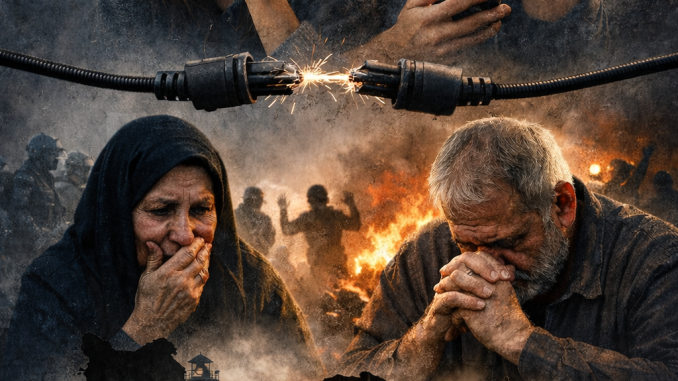
The internet and phone shutdowns in Iran are not security measures. They are the suffocation of a nation. They are the deliberate severing of emotional lifelines between sons and daughters abroad and their parents trapped inside Iran. By cutting communication, the Islamic Republic has not only shut down the internet — it has taken millions of hearts hostage.
Outside Iran, families live in constant fear. They sleep with their phones in their hands, their clothes still on, terrified that the next vibration might bring devastating news — arrest, injury, death. Mothers stare at silent screens through the night. Fathers wait helplessly for a single message: “I’m alive.”
Inside Iran, parents are unable to say they are safe. Unable to say they are hurt. Unable even to say they are afraid. They are imprisoned inside a country-sized cell — its walls built of censorship, internet blackouts, bullets, and batons.
The Islamic Republic has taken 80 million people hostage. This is not rhetoric; it is reality. When communication is cut, when truth is silenced, when people are killed in darkness, this is hostage-taking by definition. A regime that fears the voices of its own people is a regime that lost its legitimacy long ago — and now survives only through violence.
Iranian children in the diaspora are no longer simply immigrants or exiles. They are emotionally tortured witnesses. They watch as the world looks on, issues statements, expresses “concern,” and then turns away — while Iranian youth are beaten and killed in the streets.
Every minute of internet shutdown in Iran means another family abroad collapsing under anxiety. Another night without sleep. Another mother crying in silence. Another generation being traumatized. This is not merely a political crisis — it is a human catastrophe whose psychological scars will last for decades.
And history will remember.
It will remember the silence of governments.
The inaction of international institutions.
And the crime committed against a nation under the excuse of “security.”
Iran is not alone — even when its internet is cut.
The voices of grieving families, terrified children, and silenced parents will eventually break the walls of this prison.
This silence will not last forever.