

At a time when Iran is facing one of the most tense and uncertain periods in its recent history, a serious and troubling question has begun to circulate among millions of Iranians both inside the country and across the diaspora: who is actually telling the story of what is happening inside Iran?
Reports from inside the country indicate that in many cities internet access has been severely restricted or completely shut down. Phone connections are unstable, messaging platforms are inaccessible, and families often spend days without any news from their loved ones in other cities. Parents cannot reach their children, and relatives abroad anxiously wait for any sign that their families are safe.
For millions of Iranians, the silence is unbearable.
Yet, strangely, during this same period of communication blackout, several images and reports have appeared in international media showing a completely different reality.

When the People Are Silent, Some Voices Are Amplified
In recent days, viewers have seen reporters from major global networks such as CNN walking through parts of Tehran and reporting from the ground. In some segments, the streets appear relatively calm, and the overall tone of the reports suggests that daily life continues without major disruption.
For many Iranians watching these broadcasts from abroad, the reaction has not been reassurance—but confusion.
How is it possible that ordinary citizens inside Iran cannot send a simple message to their families abroad, yet foreign media crews are able to record video reports, transmit footage, and broadcast from inside the country?
Under normal circumstances, journalists operating in Iran require official permits and are subject to strict supervision. Their movements are often monitored, and their reporting activities can be limited by government regulations.
That reality makes the current situation even more puzzling.
The Question of Influencers
Another phenomenon has added to the confusion.
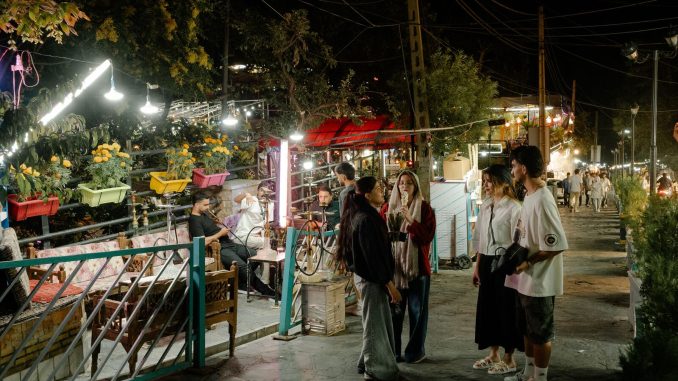
Several social media videos circulating online show foreign influencers walking in Iranian cities and recording content for their audiences abroad. In some clips, these individuals appear without the mandatory dress codes that Iranian women are required to follow.
For many Iranians, this raises obvious questions.
In a country where Iranian citizens themselves have faced arrests and harsh penalties for social media activity or violations of dress codes, how are foreign influencers able to walk freely in public spaces and produce online content without consequences?
Who granted permission for this activity?
And why are these individuals able to communicate freely with the outside world when ordinary citizens cannot?
These questions remain unanswered.
The Media Trust Crisis
The situation has also revived an older debate within the Iranian diaspora regarding international media coverage of Iran. Over the years, critics have argued that some Western networks sometimes present a version of events that does not fully reflect the lived reality of the Iranian people.
Networks such as BBC and CNN have long been influential sources of global news. However, among some Iranian audiences, skepticism has grown about whether international reporting from inside Iran can truly be independent when journalists must operate under government oversight.
This does not necessarily mean that reporters themselves are acting with ill intent. Many journalists work under extremely difficult conditions. But it does raise a legitimate question: how much of the story can actually be told when the environment itself is tightly controlled?
A Nation Cut Off From Its Own Voice
Perhaps the most painful aspect of the current situation is not the political debate, but the human cost.
Across the Iranian diaspora—from Los Angeles to Toronto, from London to Berlin—families are waiting for any news about their loved ones. Many have not heard from parents, siblings, or children for days. Social media has become filled with desperate posts asking if anyone has information about certain neighborhoods or cities.
In moments like these, information becomes more than news—it becomes lifeline.
And when only a few carefully selected voices are able to speak to the outside world, trust begins to erode.
The Need for Transparency
At the heart of the issue is a simple demand shared by many Iranians: transparency.
If foreign journalists are operating inside the country, the public deserves to know under what conditions they are working. If certain influencers are permitted to film freely, it should be clear who authorized their activities. And if communications are restricted for security reasons, the public deserves an honest explanation.
Without transparency, speculation fills the vacuum.
The Battle Over the Narrative
Wars are fought not only on battlefields, but also through information. Control of the narrative can shape how the world understands a crisis.
For Iranians watching from abroad, the contradiction between silence inside the country and selective reporting from outside has created a deep sense of frustration.
When a nation’s people cannot tell their own story, others inevitably tell it for them.
And that raises the most important question of all:
Whose story is the world really hearing?