
By : Shahbod Noori
Editor Note
3/4/2026
In recent months, many voices from the Iranian community—both inside Iran and across the world—have spoken with urgency and hope. These voices came from families of victims, activists, journalists, and ordinary citizens who have endured decades of repression. For years, Iranians have called on the free world not to ignore the suffering of the Iranian people and not to remain silent in the face of a regime that has ruled through fear, violence, and intimidation.
Among these calls has been a repeated appeal to democratic nations, especially the United States, to stand firmly with the Iranian people and to support their struggle for freedom and dignity. Many Iranian Americans have publicly asked American leaders to take stronger action against the Islamic Republic and to support a future in which Iran can once again be a free nation.
Now, as events continue to unfold and the political climate changes, an important question stands before the Iranian-American community:
Are we only asking for support, or are we also prepared to stand behind those who support us?
Politics in the United States is shaped by participation. Communities that vote are heard. Communities that organize and participate in elections gain influence. But communities that remain silent on election day often find themselves ignored in the halls of power.
For years, Iranian Americans have built successful lives in this country. Our community includes entrepreneurs, doctors, engineers, artists, academics, and business owners. In cities like Los Angeles, Washington, Houston, San Diego, and New York, Iranian Americans have become an important part of the social and economic fabric of the United States.
Yet despite this success, one reality remains clear: political participation among Iranian Americans has often been lower than it could be. While other immigrant communities have learned how to transform their numbers into political influence, many Iranian Americans have stayed on the sidelines of the electoral process.
This must change.
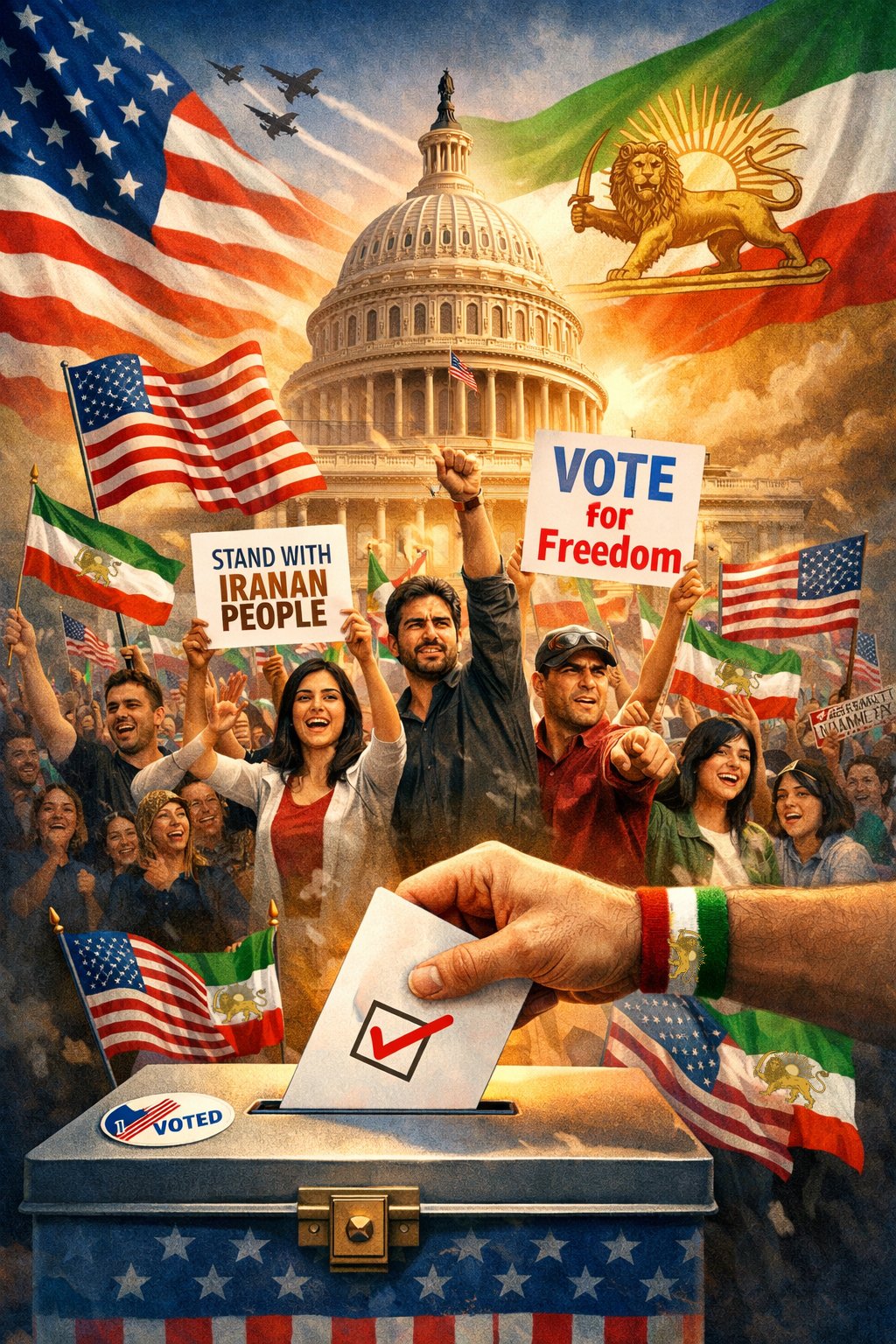
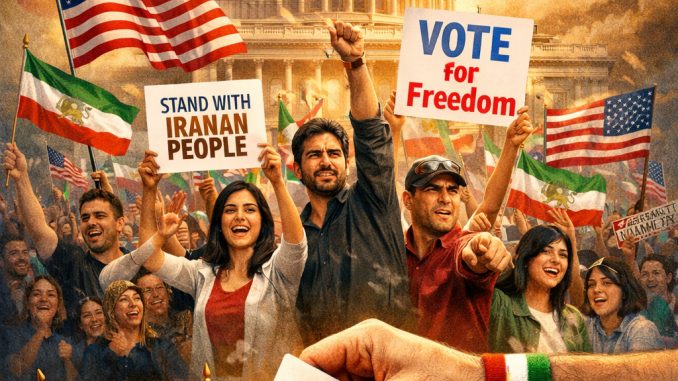
With primary elections approaching in California and across the United States, the Iranian-American community has an opportunity to demonstrate that our voice matters—not only in protests and public gatherings, but also in the democratic process itself.
During the past year, many political leaders in the United States have taken clear positions against the policies and actions of the Islamic Republic. Some have openly expressed support for the Iranian people and have spoken about the need for a different future for Iran—one based on freedom, human rights, and democratic values.
These positions have given hope to many Iranians around the world.
But hope must also be matched with action.
If we ask political leaders to stand with the Iranian people, then we must also be willing to stand with those who support the cause of freedom for Iran. In the United States, that support is expressed through civic participation—through voting, organizing, and engaging with the political process.
The upcoming primary elections present an important moment. Iranian Americans have the chance to show that our community is engaged, attentive, and ready to participate in shaping the political future of the country in which we live.
A vote is more than a political act; it is a message.
It tells elected officials that the Iranian-American community is paying attention. It tells them that we value leaders who stand for liberty and human rights. And it reminds them that Iranian Americans are not merely observers of world events—we are active participants in the democratic system of this country.
For decades, the Iranian people have fought for freedom. Many have paid the ultimate price for that dream. Their courage has inspired millions across the globe.
Here in the United States, we have the privilege of living in a democracy where participation is not only possible but encouraged. With that privilege comes responsibility.
The responsibility to vote.
The responsibility to be heard.
And the responsibility to support those who stand with the Iranian people.
The future of Iran will ultimately be determined by the Iranian people themselves. But the voice of the Iranian diaspora—especially in democratic countries—can play an important role in shaping international support for that future.
Today, the Iranian-American community stands at an important moment.
If we want our voices to matter, we must use the tools available to us.
We must participate.
We must engage.
And we must make it clear that when someone stands with the people of Iran, the Iranian-American community will stand with them as well.