
by shahbod noori
07/06/2026
The Middle East is once again standing at a familiar and painful crossroads: between war and negotiation, between threats and fragile hope, between the decisions of governments and the suffering of ordinary people.
In recent days, indirect talks between the United States and Iran have continued in Doha, Qatar. The main issues reportedly include security in the Strait of Hormuz, the return of shipping routes, frozen Iranian assets, and the future of a temporary agreement. But there is still no clear sign of lasting peace.
For Israel, the issue is not only missiles or a few days of ceasefire. Israel remains deeply concerned about Iran’s network of proxy forces in Lebanon, Syria, Iraq, and Yemen. That is why even if the sound of missiles becomes quieter, the danger of renewed conflict remains very real.
President Trump is trying to present himself as the leader who stopped a wider war and opened the door to negotiation. For Washington, this has political and strategic value. America does not want another long war in the Middle East. But negotiations with the Islamic Republic always carry the risk of delay, deception, and survival for the regime.
The main question is: where are we heading?
There are three possible paths.
The first is a fragile temporary deal. War slows down, oil markets calm down, and shipping may return to normal. But the Islamic Republic remains in power, and the people of Iran continue to live under the same pressure. This may bring comfort to global markets, but it will not bring freedom to the Iranian people.
The second path is the failure of negotiations and a return to military confrontation. In that case, Israel and the United States may increase pressure again, while the Islamic Republic could respond with missiles, drones, and proxy groups. Once again, ordinary people would pay the highest price.
The third path is real and coordinated international pressure on the Islamic Republic. This pressure must not be limited to nuclear issues. It must also include human rights, political prisoners, the repression of women, corruption, and the future of the Iranian people.
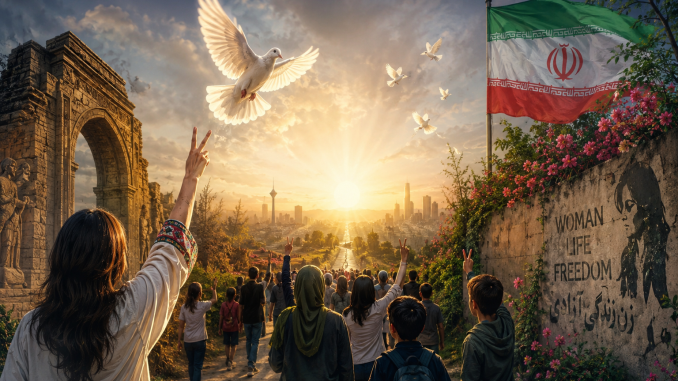
Today, the people of Iran are exhausted. They are tired of war, poverty, lies, repression, migration, and endless promises. They do not want war, and they do not want the continuation of this regime. They want a normal life: bread, freedom, safety, dignity, happiness, and a future for their children.
In the end, Iran’s future will not be decided only in Doha, Washington, or Tel Aviv. It will be decided by the Iranian people themselves. If outside pressure is joined with the voice of the people inside Iran, real change becomes more possible.
The war may be quieter today, but the real battle is not over. It is the battle between darkness and light, between a regime and a nation, between fear and hope. The destiny of Iran must belong to the people of Iran — not to secret deals behind closed doors.