
IRAN: The Eternal Land
Part Five: Elam – The First Great Kingdom of the Iranian Plateau
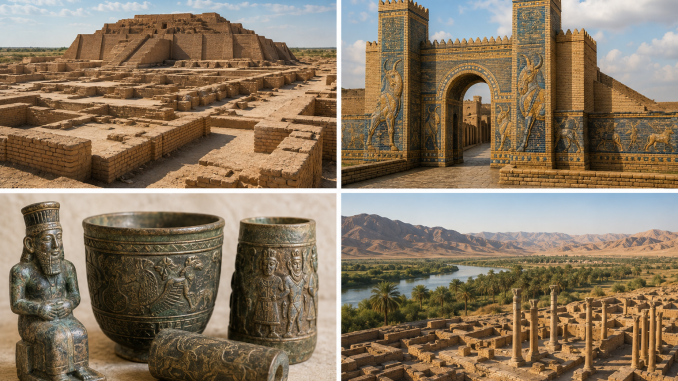
If you walk today among the ancient ruins of Susa in southwestern Iran, you will see weathered bricks, broken columns, and silent archaeological mounds. At first glance, they may seem like little more than the remains of a forgotten city. Yet beneath this soil lies the story of one of the world’s oldest civilizations—a kingdom that flourished long before the rise of Cyrus the Great and helped shape the future of Iran.
This civilization was Elam.
Emerging during the fourth millennium BCE, Elam became one of the earliest and most influential kingdoms of the ancient Near East. For more than two thousand years, the Elamites built cities, established governments, expanded trade, and created a rich artistic and cultural tradition that would leave a lasting mark on Iranian history.
The heart of Elam was the ancient city of Susa, one of the oldest continuously inhabited cities in the world. Located between Mesopotamia and the Iranian Plateau, Susa occupied a strategic position that made it an important center for commerce, diplomacy, and cultural exchange. Centuries later, the Achaemenian kings would recognize its importance and make it one of the capitals of the Persian Empire.
But Elam was far more than a single city.
Its territory stretched across much of present-day Khuzestan and into the Zagros Mountains. The Elamites developed their own language, religious beliefs, artistic traditions, and administrative system, creating a unique identity that distinguished them from their powerful neighbors.
Throughout their history, the Elamites maintained a complex relationship with the great civilizations of Mesopotamia. At times they traded peacefully; at other times they fought fierce wars against Sumer, Akkad, Babylon, and Assyria. Despite these changing political fortunes, Elam preserved its own culture and remained a major regional power for centuries.
One of Elam’s greatest architectural achievements is the magnificent Ziggurat of Chogha Zanbil, constructed more than 3,300 years ago. Today it stands as one of Iran’s most treasured archaeological monuments and was among the first Iranian sites to be inscribed on the UNESCO World Heritage List.
More than a temple, Chogha Zanbil demonstrates the remarkable engineering and architectural knowledge of the Elamite people. Built with millions of carefully crafted bricks, it reflects advanced planning, skilled construction techniques, and deep religious devotion.
Elamite art also reached an impressive level of sophistication. Bronze sculptures, finely carved cylinder seals, painted pottery, jewelry, and decorative reliefs reveal the creativity and technical skill of Elamite craftsmen. Many of these masterpieces are now preserved in leading museums around the world, where they continue to attract scholars and visitors alike.
The economy of Elam was based on agriculture, animal husbandry, metalworking, and long-distance trade. Rivers such as the Karun and Karkheh supported fertile farmland, while trade routes connected Elam with Mesopotamia, Central Asia, and other regions of the ancient world. Merchants carried not only goods but also ideas, technologies, and artistic influences across these networks.
Perhaps the greatest strength of Elam was its resilience.
Over two millennia, the kingdom survived political upheaval, foreign invasions, and repeated conflicts with neighboring empires. Although the Assyrian campaigns of the seventh century BCE severely weakened Elam and destroyed many of its cities, its civilization did not disappear.
Instead, much of its knowledge and administrative experience lived on.
When the Achaemenian Empire emerged, the legacy of Elam remained deeply rooted in the region. Archaeologists have discovered numerous royal inscriptions at Susa and Persepolis written in the Elamite language, demonstrating that it continued to serve as one of the official administrative languages of the Persian Empire.
This remarkable continuity reminds us that civilizations do not simply vanish when kingdoms fall. Their ideas, traditions, and achievements often survive through the generations that follow.
The story of Elam is therefore not only the story of an ancient kingdom. It is the story of a civilization whose influence helped shape the foundations of Iran long before the rise of the Persian Empire.
Today, the ruins of Susa and Chogha Zanbil stand as powerful reminders of a people whose creativity, determination, and vision transformed the ancient Iranian Plateau.
The history of Iran did not begin with the Achaemenians.
Long before the famous Persian kings ruled the region, the Elamites had already built cities, created art, developed systems of government, and established one of the earliest great civilizations in the Near East.
Their legacy remains an essential chapter in the remarkable story of Iran—the Eternal Land.
Next Week:
The Medes – The First Great Union of the Iranian Peoples and the Beginning of Iran’s Political Identity.