
By Shahbod Noori
3/5/2026
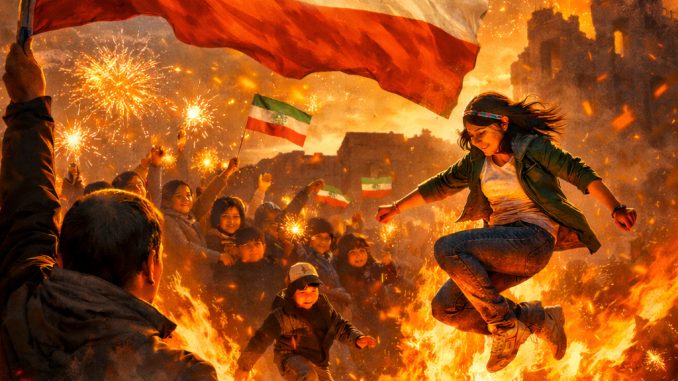
In the coming days, Iranians around the world will welcome one of the most ancient celebrations of their national heritage: Chaharshanbe Suri, the traditional festival of fire that marks the approach of spring. For centuries, this celebration has been more than just a festivity. It has been a symbol of renewal, resilience, and the enduring spirit of the Iranian people.
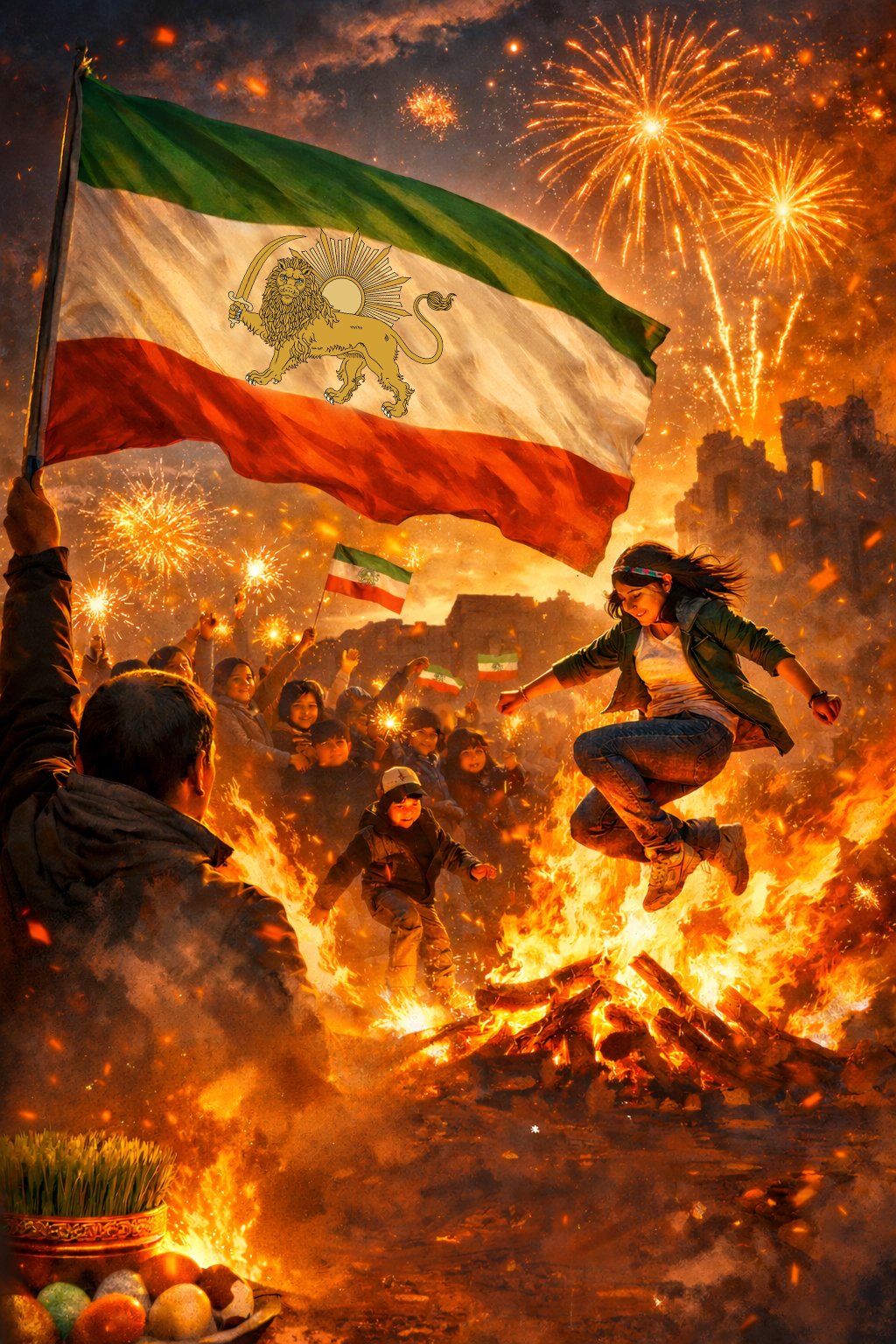
Chaharshanbe Suri is not simply about jumping over flames. It is a ritual deeply rooted in Iranian culture and history, reminding people that darkness does not last forever and that every winter eventually gives way to spring.
Throughout history, whenever Iran has faced difficult and turbulent times, this celebration has taken on an even deeper meaning.
During the past four decades, the Islamic Republic has repeatedly attempted to diminish or discourage many of Iran’s ancient traditions. Celebrations such as Chaharshanbe Suri, Nowruz, and Sizdah Bedar have often been portrayed negatively or labeled as dangerous or unnecessary. Authorities have frequently tried to restrict or discourage public celebrations.
Yet history has proven something important: no government can erase traditions that have lived in the heart of a nation for thousands of years.
Despite pressure and restrictions, the people of Iran have continued to celebrate these traditions. In many cities, the fires lit in neighborhoods and streets have represented more than just a festival; they have symbolized cultural resistance and the determination to keep Iranian identity alive.
This year, however, the circumstances are especially sensitive.
In recent weeks, military tensions and conflict have brought uncertainty and anxiety to the region. Reports of attacks and bombings have created fear and concern among many families in Iran. Many Iranians living abroad spend their days following the news and worrying about loved ones back home.
But it is precisely during such difficult times that cultural traditions become even more meaningful.
History shows that nations facing hardship often hold even more tightly to their cultural identity. Celebrations and traditions are not merely entertainment; they are reminders of a people’s history, their unity, and their hope for the future.
For the millions of Iranians living outside Iran, this responsibility is even greater.
From Los Angeles to Toronto, from London to Sydney, Iranian communities around the world represent a living extension of Iranian culture. These communities carry with them traditions, language, and identity that connect generations across continents.
If these traditions are forgotten abroad, a part of that identity slowly fades.
But if they are celebrated proudly, they send a powerful message: Iranian culture is alive and cannot be erased.
Chaharshanbe Suri is one of the strongest symbols of this resilience.
Every year in many cities around the world, Iranians gather in parks and open spaces, light small fires, and jump over the flames while repeating the ancient phrase:
“Give me your red color and take away my yellow.”
This simple act carries a deep meaning. It symbolizes leaving sickness, weakness, and hardship behind, while embracing strength, energy, and renewal.
What might appear to be a simple celebration is, in reality, a reminder that Iranian culture is older and stronger than any temporary political system.
Of course, the reality today is painful for many Iranians. Families in Iran continue to face uncertainty, anxiety, and fear. Many people living abroad follow the news every day, worried about their homeland and the future of their country.
Yet perhaps this is exactly why traditions like Chaharshanbe Suri matter so much.
These celebrations remind us that the Iranian nation is more than politics or conflict. It is a civilization thousands of years old, built on culture, poetry, traditions, and a deep sense of identity.
For Iranians abroad, celebrating Chaharshanbe Suri this year can also be a moment of unity and solidarity — a chance to gather, remember shared roots, and send a message of hope to those inside Iran who may feel surrounded by darkness.
Every fire lit during Chaharshanbe Suri can represent a wish for peace, freedom, and a brighter future for Iran.
Ultimately, Chaharshanbe Suri is not only a festival.
It is part of the long story of a nation that has endured countless hardships yet continues to rise again and again.
And perhaps that is the true message of the fire:
Fire burns, but it gives light.
Winter arrives, but spring always follows.
And as Iranian tradition reminds us,
after every darkness, there will be light again.