
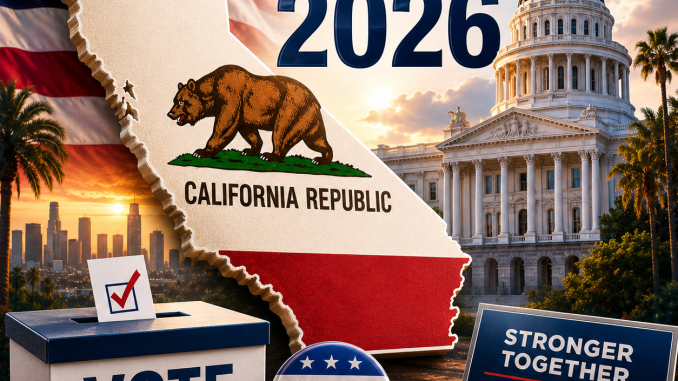
by; shahbod noori
A Look at the Election, November’s Future, and the Power of the Voter
California’s recent election is not truly over yet. The polls have closed and votes have been cast, but ballot counting continues. This reality reminds us that in modern America, elections are often decided not only on Election Day, but also during the days and weeks that follow as mail-in ballots are processed and counted.
Because California relies heavily on vote-by-mail, final results can take time. Ballots postmarked by Election Day may still arrive and be counted days later. While some races remain undecided, one thing has become increasingly clear: California’s political landscape is no longer as predictable as it once was.
For decades, California has been viewed as one of the bluest states in America. Democrats have dominated statewide offices, the legislature, major cities, and much of the policy-making process. Yet today, many Californians—even longtime Democratic voters—are expressing frustration over the high cost of living, rising taxes, expensive gasoline, homelessness, public safety concerns, the departure of businesses, and the ever-growing cost of housing.
That frustration is precisely what Republicans hope to transform into political momentum this November.
In the 2024 presidential election, President Donald Trump carried 31 of the nation’s 50 states. While Democrats maintained control of 19 states and Washington, D.C., Republicans expanded their influence across much of the country. Important battleground states such as Arizona, Georgia, Michigan, Nevada, North Carolina, Pennsylvania, and Wisconsin all became major victories for Republicans.
These states were once considered highly competitive political battlegrounds. Their shift demonstrated that voters are willing to change direction when they believe economic and social conditions are moving in the wrong direction.
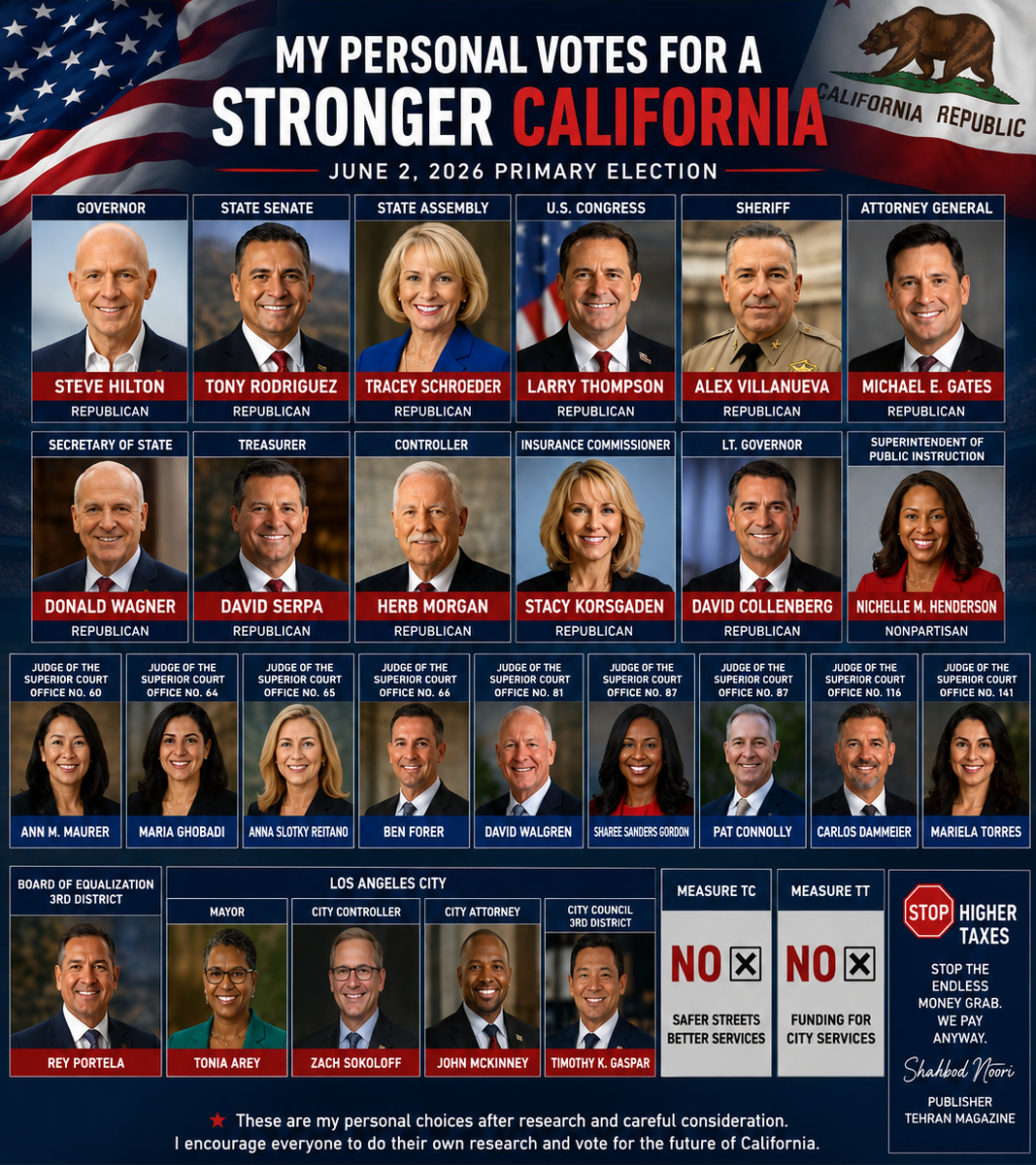 States such as Florida, Texas, Ohio, Iowa, Tennessee, Alabama, Mississippi, Arkansas, Louisiana, Kentucky, West Virginia, Oklahoma, Kansas, Nebraska, North Dakota, South Dakota, Wyoming, Idaho, Montana, and Utah have become strong Republican strongholds. In many of these states, Republicans control not only federal elections but also governorships and state legislatures.
Meanwhile, Democrats continue to maintain significant influence in states such as California, New York, Massachusetts, Washington, Oregon, Illinois, Maryland, and much of the Northeast. However, even in some traditionally Democratic areas, voter dissatisfaction appears to be growing.
California represents perhaps the most important test of this changing political climate. It may be too early to declare that California will turn red in November, but it is no longer accurate to suggest that Republicans have no chance of making gains.
The emergence of strong Republican voices in statewide races reflects a growing desire among some voters for alternative approaches to taxes, public safety, economic growth, and government accountability.
The central question is not whether California will become red overnight. The real question is whether dissatisfied voters will show up and participate in large enough numbers to influence the future direction of the state.
Historically, one of the greatest challenges for Republicans in California has not simply been the number of voters, but voter participation. Many conservatives and independents believe their vote will not matter because California has voted Democratic for so long. Yet that belief itself often becomes a self-fulfilling prophecy.
No state remains permanently red or blue if citizens continue to participate actively in the democratic process.
Florida serves as a powerful example. Once one of the nation’s most competitive swing states, Florida gradually became a Republican stronghold through consistent voter engagement, strong grassroots organization, and messaging focused on economic opportunity and family values.
Texas has experienced dramatic demographic growth and change, yet it remains Republican largely because conservative voters continue to participate in high numbers.
California will not change through frustration alone. Complaints around the dinner table, criticism on social media, and dissatisfaction with public policy do not change election outcomes. Elections are decided by voters who take the time to cast ballots.
This reality applies equally to the Iranian-American community.
Iranian-Americans have built successful lives throughout California through education, entrepreneurship, hard work, and civic engagement. They have become respected members of their communities and have contributed significantly to the economic and cultural success of the state. However, political influence requires participation.
No community can expect its concerns to be heard if it remains absent from the voting booth.
Whether the issue is taxation, public safety, education, foreign policy, business regulation, housing costs, or the future of our cities, the ability to shape policy begins with voting.
For Republicans, November represents more than a routine election. It is an opportunity to determine whether voter frustration can be translated into meaningful political gains.
Even if California does not suddenly become a red state, a strong showing by Republicans and independent voters would send a powerful message to Sacramento: voters are paying attention, and accountability matters.
Nationally, Republicans currently hold significant political momentum. Their success in carrying 31 states in the last presidential election, combined with Republican control of a majority of governorships nationwide, demonstrates that the party remains highly competitive across much of the country.
However, future success is not guaranteed.
Republicans must continue addressing issues that matter to everyday Americans: inflation, economic growth, border security, public safety, energy affordability, and government efficiency. Equally important is their ability to appeal not only to traditional conservatives but also to independents and moderate voters seeking practical solutions.
For California specifically, the path forward is clear. The conversation must focus on issues that directly affect working families: housing affordability, taxes, gasoline prices, insurance costs, crime, education, infrastructure, water resources, wildfire prevention, and economic opportunity.
These are not partisan concerns. They are daily realities for millions of Californians.
Today, California remains a blue state. Yet many observers believe the political landscape is shifting. Whether those changes become significant enough to alter future elections remains uncertain.
One fact, however, is undeniable.
Political change never happens by accident. It happens when citizens become engaged, informed, and motivated to participate.
Every voter registration matters. Every ballot matters. Every conversation within a family, business, or community matters.
California’s future has not yet been written.
The next chapter will be written by those who vote, not by those who simply complain from the sidelines.
As November approaches, voters across California face an important choice. Regardless of party affiliation, participation remains the foundation of democracy.
The future belongs to those who show up.