
Law for Everyone with Donya Noori
Graduate of Southwestern Law School and Legal Professional with the Law Offices of Camellia Jalilvand
Social media has become part of everyday life. We share birthdays, family dinners, vacations, weekend activities, exercise, celebrations, and countless ordinary moments on Instagram, Facebook, TikTok, and other platforms.
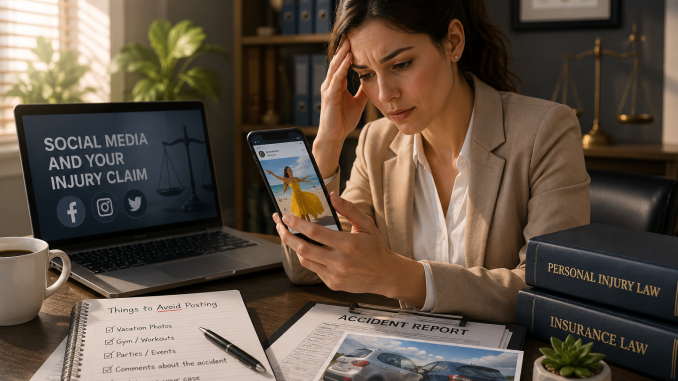
But if you are involved in a personal injury claim after an automobile accident, something as simple as a photograph or video may take on an entirely different meaning.
Imagine that someone suffers neck and back injuries in a collision and begins receiving medical treatment. Several weeks later, the person attends a friend’s birthday dinner. Someone takes a photograph showing the injured person smiling at the restaurant and posts it online.
Does a smiling photograph prove that the person is not injured? Of course not.
But could an insurance company or opposing party attempt to use that photograph to question the seriousness of the injuries? Possibly.
That is why social media activity deserves careful attention while a personal injury claim is pending.
Insurance Companies May Look at Social Media
Many people assume that an insurance company will review only the police report, medical records, photographs of the damaged vehicles, and statements from witnesses.
In some cases, however, publicly available information on the internet may also be reviewed.
If your social media account is public, photographs, videos, comments, and other information you post may be visible to people you do not know.
Even an innocent post can sometimes create a misleading impression when viewed without context.
One Photograph Does Not Tell the Whole Story
Suppose a person suffers a knee injury in an accident. A physician recommends limiting physical activity, but the injured person attends a child’s graduation ceremony.
Photographs from the event may show the person standing and smiling.
What the photograph does not show is that the individual may have been standing for only a few minutes, needed to sit down immediately afterward, took pain medication before attending, or experienced significant discomfort after returning home.
Social media tends to show the best moments of our lives—not the complete reality.
Unfortunately, someone viewing a photograph without knowing the circumstances may reach a very different conclusion.
Be Careful With Exercise and Activity Videos
Videos can create even more questions.
If someone claims that an injury prevents certain physical activities but later posts a video showing exercise, dancing, lifting heavy objects, hiking, or another demanding activity, the video may be examined closely.
This does not automatically mean the person was never injured. Someone may be able to perform an activity briefly and experience significant pain afterward.
However, video rarely provides the full medical context.
For this reason, accident victims should think carefully before posting physical activities while their injury claim is being evaluated.
Your Friends Can Post About You Too
Even if you decide not to post anything yourself, friends and relatives may unknowingly create a problem.
Perhaps you attend a family gathering and someone posts a photograph of you. Maybe a friend tags you in a picture from a weekend trip or a walk in the park.
You may not even know the photograph exists until later.
If you are involved in a significant personal injury matter, it can be helpful to ask close friends and family members to avoid posting or tagging photographs of you without checking with you first.
Should You Delete Your Accounts?
Not necessarily.
In fact, suddenly deleting existing posts or accounts after a legal dispute has begun may create additional questions, particularly if the information could be relevant to the case.
Rather than immediately deleting large amounts of material, it is generally better to understand your obligations concerning existing information and be cautious about what you post going forward.
If you already have an active claim and are uncertain about what should be preserved, seek advice appropriate to your particular situation before making major changes.
Does Making Your Account Private Solve the Problem?
Making an Instagram or Facebook account private can limit public access, but it should not create a false sense of security.
Friends can take screenshots. Content can be shared with others. And depending on the circumstances of a legal dispute, relevant social media information may become an issue even when an account is not publicly accessible.
A useful rule is simple:
Do not post anything you would be uncomfortable having questioned in connection with your case.
Avoid Posting Details About the Accident
Immediately after a collision, emotions can run high.
Someone may post:
“That crazy driver almost killed me!”
Another person may write:
“Luckily I’m fine. Only the car was damaged.”
Both statements could create unnecessary complications.
The first may make conclusions about responsibility before all the evidence has been reviewed. The second may have been written before delayed symptoms appeared.
It is usually safer to avoid discussing the details of the collision, insurance negotiations, medical treatment, or legal strategy on social media.
Private Messages Require Caution Too
Direct messages and private conversations may feel completely confidential, but remember that the person receiving a message can save it, forward it, or take a screenshot.
For that reason, use the same common sense when discussing an accident through private messages that you would use when posting publicly.
Honesty Is Essential
The most important principle in any personal injury matter is honesty.
If you can walk, do not claim that you cannot walk. If you attended a restaurant or family gathering, do not say that you never left your home.
Being injured does not mean you must stop living.
Accident victims can still smile, celebrate birthdays, spend time with family, attend important events, and enjoy good moments.
The important point is that statements about your physical limitations should be truthful and consistent with your actual condition and medical evidence.
Think Before You Post
Before posting a photograph or video after a serious accident, ask yourself one simple question:
If someone who knew nothing about my medical condition saw this post, what might they assume?
Taking a few seconds to consider that question can prevent significant misunderstandings later.
Final Thoughts
Social media is part of modern life, and the goal is not to disappear from the internet for months simply because you were involved in an accident.
But when a personal injury claim is pending, it is important to understand that what you share online may no longer feel entirely personal.
A photograph, video, comment, or casually written sentence can sometimes be viewed outside its original context.
Honesty, caution, and common sense are your best protections. Continue living your life, but think carefully before sharing personal information or details related to your accident.
In a legal dispute, something that looks like an ordinary photograph to you may look like evidence to someone else.
About the Author
Donya Noori is a graduate of Southwestern Law School and works with the Law Offices of Camellia Jalilvand in Los Angeles. Her professional experience focuses primarily on automobile accident and personal injury matters.
This article is provided for educational and informational purposes only and should not be considered legal advice for any specific situation.
If you have questions regarding an automobile accident or personal injury matter, you may contact the Law Offices of Camellia Jalilvand and request to speak with Donya Noori.