
by shahbod noori
8/31/2026
From a poor little home in the Tennessee mountains to the hearts of millions, Dolly Parton proved that true greatness is not measured only by fame, talent or fortune—but by what we give back.
Some artists die and leave behind songs.
Others leave behind something much greater.
Dolly Parton left behind love.
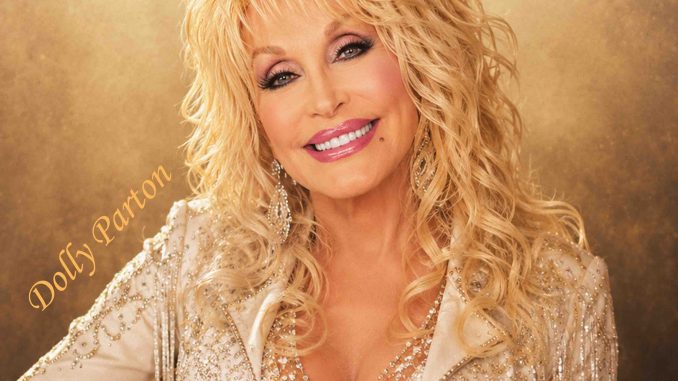
For generations, the world knew her instantly: the enormous blonde hair, sparkling costumes, unmistakable Tennessee accent, infectious humor and, of course, that extraordinary voice.
But behind the rhinestones was a woman who never forgot the little girl she once was.
Born in 1946 in rural Tennessee, Dolly was the fourth of twelve children in a family that had very little money. Her childhood was filled with hardship, but also with family, faith, storytelling and music.
Those memories eventually became songs.
In “Coat of Many Colors,” she told the story of a coat her mother made from scraps of fabric because the family could not afford a new one. Other children saw poverty.
Dolly saw her mother’s love.
Perhaps that tells us almost everything we need to know about her.
From Tennessee to the World
Dolly began singing as a child and moved to Nashville immediately after graduating from high school.
Success did not come simply because she looked different or had a beautiful voice. She worked relentlessly, wrote her own music and refused to become a copy of anyone else.
Eventually came songs that entered American cultural history:
“Jolene.”
“9 to 5.”
“Coat of Many Colors.”
“I Will Always Love You.”
The last of these became a worldwide phenomenon years later when Whitney Houston recorded her breathtaking version.
Dolly became a singer, songwriter, actress, businesswoman and cultural icon.
But something remarkable happened as she became richer and more famous:
She did not forget where she came from.
The Little Girl Who Remembered Her Father
Dolly’s father was a hardworking man who had received little formal education and struggled with reading and writing.
His experience remained with her.
In 1995, Dolly created the Imagination Library, initially for children in her home county in Tennessee. The idea was beautifully simple: send free books to young children so that a family’s financial situation would never determine whether a child could discover the joy of reading.
The little project grew.
Then it grew again.
Eventually, hundreds of millions of books were mailed to children, and the program expanded far beyond Tennessee and the United States.
Imagine that legacy.
Somewhere, a child opens the mailbox and finds a book.
That child may have no idea who Dolly Parton was.
And perhaps that is the most beautiful part.
True generosity does not require applause.
Dolly also supported families affected by devastating Tennessee wildfires, medical research, education and numerous charitable causes.
She understood something fame sometimes makes people forget:
Success gives you a bigger stage—but you decide what to do with it.
Nearly Six Decades of Love
Behind one of the most public careers in entertainment was an extraordinarily private love story.
Dolly married Carl Dean in 1966.
He largely avoided Hollywood and the spotlight, while his wife became one of the most recognizable women in America.
Their marriage lasted nearly six decades.
Carl died in 2025.
For Dolly, who had spent almost her entire adult life with him, his death was an enormous loss.
Now she, too, is gone.
And suddenly all those songs about love, separation, memory and saying goodbye sound a little different.
A Lesson for Artists Everywhere
There is something in Dolly Parton’s story that deserves attention far beyond America—and perhaps especially among our own Iranian artistic community.
Fame is not greatness.
Followers are not greatness.
Money, sold-out concerts, awards and magazine covers are not greatness.
Dolly had all of them.
Yet today, people are not mourning only the woman who sang “Jolene.”
They are mourning the woman who gave books to children.
The woman who helped families after disaster.
The woman who could laugh at herself.
The woman who became enormously successful without pretending that success made her more important than everyone else.
That may be her greatest lesson to every successful artist:
When you reach the top, look down occasionally.
See who is still struggling.
See the child who needs a book.
See the family that needs help.
See the person who needs hope.
Then reach down and bring someone else up with you.
Goodbye, Dolly
The lights eventually go dark on every stage.
But somewhere tonight, a child may open a book that arrived because Dolly Parton decided many years ago that children deserved books regardless of how much money their parents had.
That child may never hear “Jolene.”
They may never watch 9 to 5.
They may never know what Dollywood was.
But they may read that book.
And another.
Perhaps one day that child will become a teacher, doctor, writer, scientist—or even an artist.
If so, a tiny part of Dolly will still be here.
Maybe that is what immortality really means.
Not having our photograph remembered forever, but leaving something behind that continues making another person’s life a little better.
Dolly Parton came from poverty.
She became wealthy.
She became famous.
She became a star.
But in the end, perhaps the most valuable thing she left behind wasn’t her money, her rhinestones or even her music.
It was kindness.
Goodbye, Dolly.
We will always love you.