
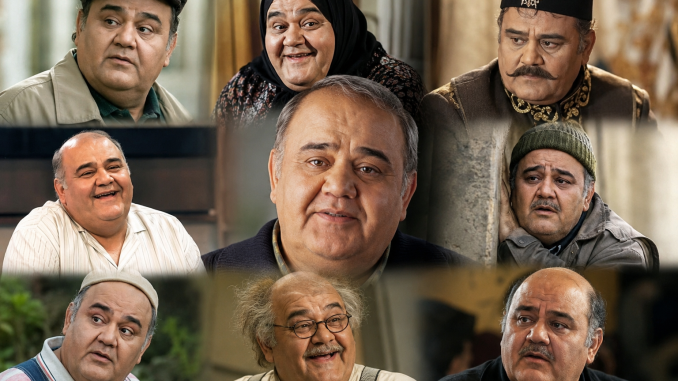
Iran’s artistic community is mourning the loss of one of its most beloved and enduring performers. Akbar Abdi, the actor who entertained millions of Iranians for more than four decades through his unforgettable characters, remarkable versatility, and deeply human sense of humor, has passed away at the age of 66.
The news of his death brought widespread grief across the Iranian cultural community. Artists, filmmakers, colleagues, and generations of viewers shared messages of sorrow and remembrance for a man whose work had become an inseparable part of Iranian cinema and television.
Akbar Abdi was born on August 26, 1960, in Tehran. He began his artistic career in theater before appearing on television in the early 1980s. His extraordinary ability to transform his appearance, imitate accents, use physical comedy, and create believable characters quickly attracted public attention.
For many Iranians, some of their earliest childhood memories of television are connected to Abdi’s performances in popular programs such as I’m Late for School Again and The Come-and-Go Neighborhood. His natural warmth and comic timing made him an immediate favorite among audiences of all ages.
However, Akbar Abdi was far more than a comedy actor. Throughout his career, he repeatedly demonstrated that he could perform serious, emotional, and dramatic roles with equal power. Behind the laughter was an actor capable of expressing pain, loneliness, vulnerability, and the complicated realities of ordinary life.
His film career included some of the most memorable productions in the history of Iranian cinema. Among his best-known works were The Tenants, Mother, Nasser al-Din Shah, Actor of Cinema, The Snowman, The Actor, and I Feel Sleepy.
His performance in Mother, directed by the legendary Ali Hatami, remains one of the most respected roles of his career. Years later, his performance in I Feel Sleepy, directed by Reza Attaran, once again reminded audiences of his extraordinary range and talent.
Abdi received the Crystal Simorgh at the Fajr International Film Festival for his performances in Mother and I Feel Sleepy. These honors represented only a small part of a career filled with memorable performances and widespread public admiration.
One of Akbar Abdi’s most distinctive qualities was his fearless willingness to play radically different characters. He portrayed elderly people, individuals with disabilities, historical personalities, working-class citizens, and even female characters with remarkable confidence and precision.
At a time when many actors avoided roles that challenged conventional expectations, Abdi embraced them. His performances were not merely based on costumes or makeup. He studied movement, voice, facial expressions, and emotional details, allowing each character to feel complete and believable.
This ability made him one of the most versatile actors in Iranian entertainment. He could make an audience laugh in one scene and bring them to tears in the next. Few performers possessed his gift for moving so naturally between comedy and tragedy.
Many of his characters became part of Iran’s cultural memory. Audiences repeated his dialogue, imitated his expressions, and continued watching his movies and television programs long after their original release.
Colleagues often spoke about Abdi’s humility, professionalism, and friendly personality. Despite his enormous fame, he remained closely connected to ordinary people. He never appeared distant from the audience that had supported him throughout his life.
His popularity crossed generations. Children who first watched him during the 1980s later introduced his films to their own children. Younger audiences discovered him through television reruns, online clips, and later movie roles.
In recent years, Abdi faced several health difficulties and was hospitalized on different occasions. Nevertheless, he often returned to public life with optimism, humor, and a determination to continue working.
His struggles with illness reminded the public that behind the famous comic face was a human being who had experienced hardship, physical pain, and personal challenges. Yet he continued to offer laughter to others, even during difficult periods of his own life.
The death of Akbar Abdi represents more than the loss of a successful actor. It marks the passing of an artist who helped shape an important chapter in the history of Iranian cinema and television.
His career reflected the experiences of several generations of Iranians. His characters represented families, neighborhoods, dreams, disappointments, social struggles, and the everyday humor that helped people survive difficult times.
Perhaps his greatest legacy is the laughter he brought to millions of people. During years marked by war, economic hardship, migration, political uncertainty, and social change, his performances gave audiences moments of happiness and emotional relief.
Artists will continue to appear, and Iranian cinema will continue to produce new stars. Yet some performers emerge only once in a generation. Akbar Abdi was undoubtedly one of those rare figures.
His name will remain alive through the films and television programs he left behind. His voice, expressions, characters, and unforgettable performances will continue to bring laughter and emotion to audiences for many years to come.
Today, Iranian cinema has lost one of its most recognizable and beloved faces. But Akbar Abdi’s place in the hearts of the Iranian people will not disappear.
He will be remembered not only as a talented actor, but as a symbol of warmth, humor, courage, and artistic creativity. His life may have ended, but the laughter he created will remain part of Iran’s cultural memory forever.
May he rest in peace, and may his memory always be honored.